
Description
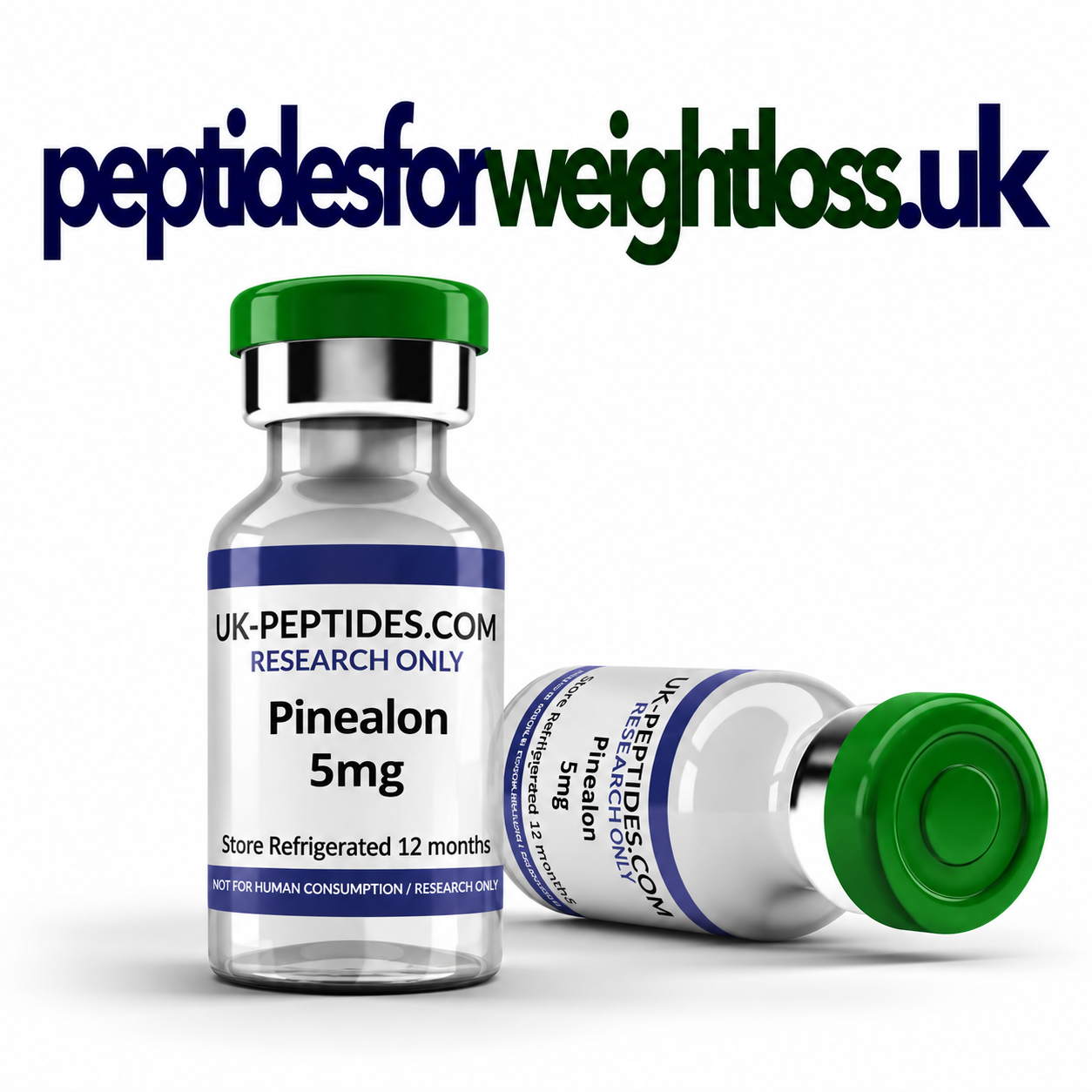
Pinealon 5mg – EDR Bioregulator Research Peptide
Pinealon 5mg is a synthetic tripeptide associated with scientific research into neuronal cell biology, oxidative stress, cellular signalling and peptide bioregulation. Also known as the EDR peptide, Pinealon consists of three amino acids: glutamic acid, aspartic acid and arginine.
Developed within the field of short peptide bioregulator research, Pinealon has attracted scientific interest because of experimental findings involving cellular responses to oxidative stress and potential interactions with genetic regulatory mechanisms.
The Pinealon 5mg product listing is relevant to researchers examining the biological properties of short peptides and their effects in controlled laboratory systems.
What Is Pinealon Peptide?
Pinealon is a synthetic tripeptide identified by the amino acid sequence Glu-Asp-Arg, commonly abbreviated EDR. It belongs to a family of short peptides investigated by researchers associated with the Khavinson peptide bioregulator programme.
Unlike larger peptide molecules, Pinealon contains only three amino acid residues. Its relatively simple molecular structure has made it a subject of experimental research into peptide interactions with cellular components.
Published investigations have explored Pinealon in neuronal cell cultures, animal models and molecular biology experiments. These studies contribute to scientific understanding but do not establish Pinealon as a proven medical treatment.
Pinealon 5mg Product Specifications
- Product Name: Pinealon 5mg
- Alternative Name: EDR Peptide
- Amino Acid Sequence: Glu-Asp-Arg
- Peptide Classification: Synthetic tripeptide
- Labelled Quantity: 5mg
- Molecular Formula: C15H26N6O8 (free peptide)
- Approximate Molecular Weight: 418.40 g/mol (free peptide)
- Research Category: Peptide bioregulation
- Research Areas: Neuronal biology, oxidative stress and cellular signalling
- Product Purity: Confirm using batch-specific analytical documentation
Understanding the Pinealon EDR Peptide
The abbreviation EDR represents the three amino acids that form Pinealon: glutamic acid (E), aspartic acid (D) and arginine (R).
These amino acids are connected through peptide bonds to form a short molecular sequence investigated in cellular research.
Pinealon has been studied for its potential interactions with intracellular regulatory processes, including pathways involved in oxidative stress responses and cell viability.
Its proposed mechanisms remain under investigation, and findings from experimental systems cannot automatically be applied to humans.
Scientific Research Into Pinealon 5mg
1. Neuronal Cell Research
One important area of Pinealon research involves neuronal cells and their responses to environmental or biochemical stress.
Experimental investigations have examined Pinealon in cerebellar granule cells and other cellular models. Researchers have reported changes in cellular viability and responses to experimentally induced stress.
These findings are relevant to the study of neuronal biology but do not demonstrate clinical neuroprotective effects in humans.
2. Oxidative Stress and Reactive Oxygen Species
Oxidative stress occurs when the production of reactive oxygen species exceeds the ability of biological systems to regulate them effectively.
A published laboratory study investigated Pinealon in cerebellar granule cells, neutrophils and PC12 cells exposed to oxidative stress.
The researchers reported reduced reactive oxygen species accumulation and changes in cell viability under the experimental conditions.
These observations provide a foundation for further investigation into cellular stress responses rather than evidence of established therapeutic benefits.
3. Cellular Ageing Research
Pinealon has also been investigated within the broader field of peptide bioregulation and cellular ageing.
Researchers have examined whether short synthetic peptides can influence cellular processes associated with ageing, including oxidative damage and molecular regulation.
Although some experimental findings suggest biological activity, there is insufficient reliable clinical evidence that Pinealon slows human ageing or extends lifespan.
4. Peptide and DNA Interaction Studies
Another area of scientific interest involves the potential interaction of Pinealon with intracellular components, including DNA.
Laboratory and molecular modelling studies have explored whether the EDR peptide can interact with particular DNA sequences and influence cellular regulatory processes.
These proposed interactions remain subjects of scientific investigation. Their physiological significance and relevance to human health have not been conclusively established.
5. Experimental Cognitive Research
Preclinical studies have investigated Pinealon in animal models involving learning, neuronal stress and neurological processes.
Some experiments have reported changes in behavioural or cellular outcomes. However, these results have not been confirmed through adequately controlled human clinical trials.
Pinealon should therefore not be described as a clinically proven memory enhancer, cognitive treatment or neuroprotective medicine.
Pinealon and Neuroprotection: What Does the Evidence Show?
Pinealon is frequently discussed in connection with neuroprotection because of its experimental effects on neuronal cells exposed to oxidative stress.
Published research has identified cellular responses that may help scientists investigate the biological mechanisms involved in neuronal stress.
Nevertheless, the evidence remains predominantly preclinical, and much of the published literature originates from a limited number of research groups.
There is currently insufficient reliable human evidence to conclude that Pinealon prevents neurological disease, improves memory or protects the human brain from age-related decline.
Understanding the Pinealon 5mg Label
The 5mg designation identifies the labelled quantity of peptide material. It does not represent a recommended human dosage or independently verify chemical purity, sterility or pharmaceutical suitability.
Researchers should review the product’s molecular identity, formulation and batch-specific analytical documentation before assessing its suitability for laboratory investigation.
Research Quality and Product Documentation
When evaluating Pinealon research material, important quality considerations include:
- Verified Glu-Asp-Arg peptide identity
- Batch-specific certificate of analysis
- Analytical purity and composition testing
- Manufacturer and batch traceability
- Accurate labelled quantity
- Packaging integrity
- Manufacturer-specified storage conditions
- Clear intended-use information
These factors help researchers evaluate product identity and quality without relying on unsupported marketing claims.
Storage and Handling Considerations
Pinealon research material should be stored and handled according to the manufacturer’s verified instructions.
Storage requirements depend on the product’s physical form, chemical composition, packaging and available stability data.
General peptide storage recommendations should not replace product-specific technical documentation.
Safety and Research Limitations
Pinealon remains an investigational peptide. Its long-term safety, pharmacokinetics, appropriate clinical applications and therapeutic effectiveness in humans have not been adequately established.
Experimental results involving cellular antioxidant activity or neuronal viability should not be interpreted as evidence that Pinealon can treat neurological disorders or prevent cognitive decline.
This product information is intended for scientific and educational purposes and does not provide medical advice or instructions for human administration.
Frequently Asked Questions About Pinealon 5mg
What is Pinealon 5mg?
Pinealon 5mg is a product listing for a synthetic tripeptide commonly identified by the amino acid sequence Glu-Asp-Arg (EDR).
What does EDR mean?
EDR represents glutamic acid, aspartic acid and arginine, the three amino acids that form the Pinealon peptide.
What is Pinealon studied for?
Pinealon has been investigated in laboratory and animal studies involving neuronal cells, oxidative stress, cellular signalling and biological ageing.
Does Pinealon improve memory?
Some animal studies have examined learning and cognitive outcomes. However, reliable controlled human evidence is insufficient to establish memory-enhancing benefits.
Is Pinealon an anti-ageing peptide?
Pinealon is studied within the field of peptide bioregulation and cellular ageing, but it has not been clinically proven to slow human ageing.
Is Pinealon an approved medicine?
Pinealon is not an established FDA- or EMA-approved medicine for neurological conditions, cognitive enhancement or anti-ageing treatment.
What does Pinealon 5mg mean?
The 5mg designation describes the labelled amount of peptide material and does not establish a recommended dose or pharmaceutical quality.
What is the difference between Pinealon and Epitalon?
Pinealon is the EDR tripeptide primarily investigated in neuronal and cellular stress research. Epitalon is a different peptide with the sequence Ala-Glu-Asp-Gly, studied in separate experimental ageing-related research.
Pinealon 5mg – Product Summary
Pinealon 5mg is a synthetic EDR tripeptide associated with research into neuronal cell biology, oxidative stress, peptide-DNA interactions and cellular ageing.
Its short amino acid sequence and experimental biological activity have made it relevant to investigations of peptide bioregulation.
However, clinical effectiveness and human safety remain unestablished. Product identity, purity, batch documentation and intended use should be verified before selecting Pinealon for laboratory research.
Reviews
There are no reviews yet.