
Description
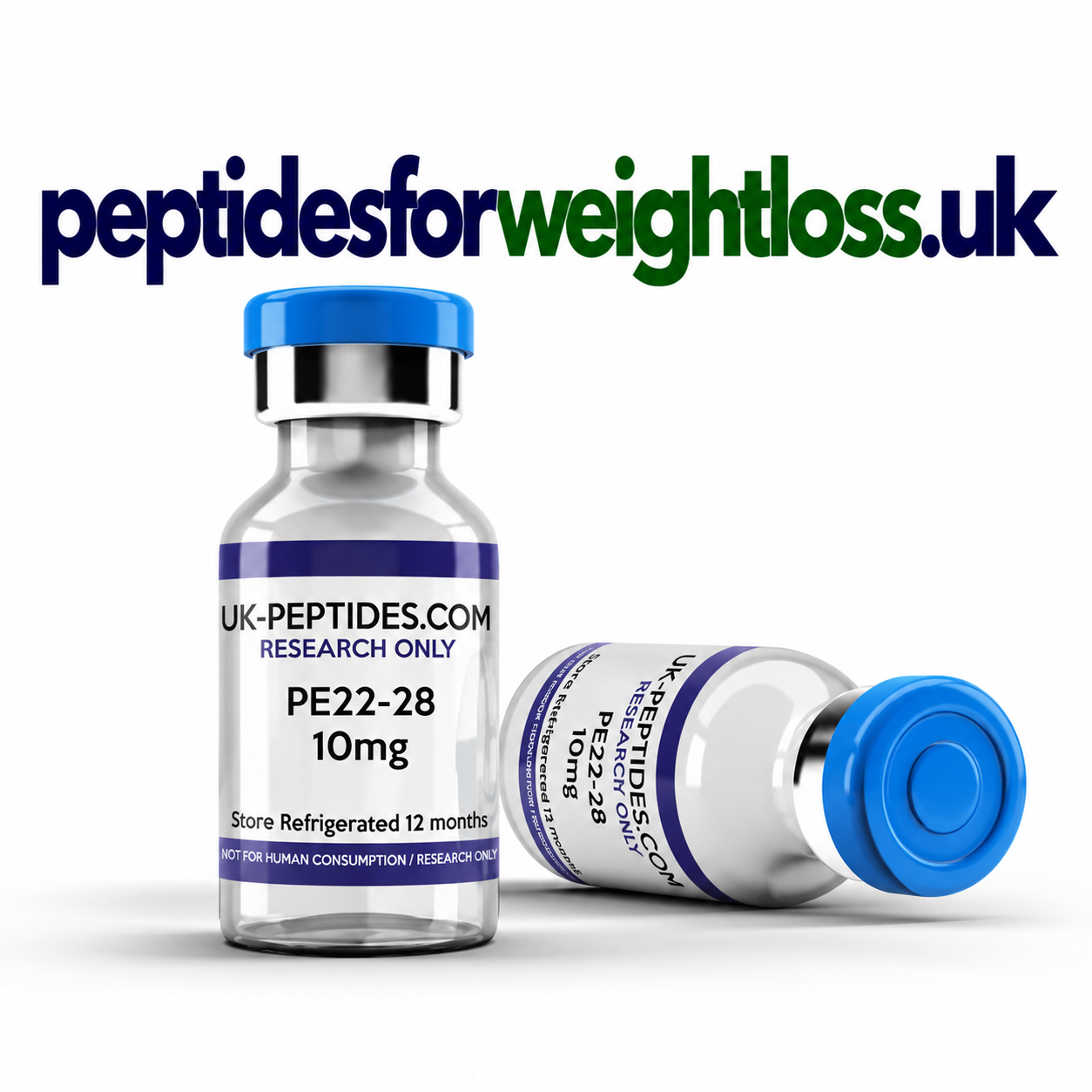
PE-22-28 5mg – Mini-Spadin TREK-1 Research Peptide
PE-22-28 5mg is a synthetic heptapeptide associated with scientific research into TREK-1 potassium channel signalling, neuronal activity and experimental neuroscience. Also known as mini-spadin, PE-22-28 is a shortened peptide fragment derived from the spadin research programme.
PE-22-28 has attracted scientific interest because of laboratory findings involving selective TREK-1 channel inhibition and experimental studies examining neuronal signalling, synaptic proteins and behavioural responses in animal models.
For researchers investigating peptide-based ion channel modulation, PE-22-28 represents a molecular research compound with a defined amino acid sequence and a limited but relevant preclinical literature.
What Is PE-22-28 Peptide?
PE-22-28 is a seven-amino-acid peptide with the sequence Gly-Val-Ser-Trp-Gly-Leu-Arg, abbreviated GVSWGLR.
It was identified during investigations into shortened derivatives of spadin, a peptide associated with the sortilin signalling system.
Spadin and its shorter derivatives have been studied for their interactions with TREK-1, a potassium channel involved in regulating neuronal electrical activity.
PE-22-28 is an investigational research peptide rather than an approved medicine for depression or any other medical condition.
PE-22-28 5mg Product Specifications
- Product Name: PE-22-28 5mg
- Alternative Name: Mini-Spadin
- Peptide Sequence: Gly-Val-Ser-Trp-Gly-Leu-Arg
- One-Letter Sequence: GVSWGLR
- Peptide Classification: Synthetic heptapeptide
- Labelled Quantity: 5mg
- Molecular Formula: C35H55N11O9 (unmodified free peptide)
- Approximate Molecular Weight: 773.9 g/mol (unmodified free peptide)
- Research Category: Neuropeptide and ion channel research
- Primary Research Target: TREK-1 potassium channel
- Research Focus: Neuronal signalling, synaptic biology and experimental behavioural neuroscience
- Product Purity: Confirm using batch-specific analytical documentation
- Storage: Follow verified manufacturer instructions
Understanding the PE-22-28 Amino Acid Sequence
PE-22-28 contains seven amino acid residues arranged in a specific sequence. This molecular structure distinguishes it from full-length spadin and other modified spadin analogs.
The peptide sequence is commonly written as GVSWGLR, representing glycine, valine, serine, tryptophan, glycine, leucine and arginine.
In experimental studies, small differences in amino acid sequence or chemical modifications have been associated with changes in TREK-1 inhibitory activity.
For this reason, researchers should verify the exact peptide identity rather than assuming that all spadin-related compounds have equivalent properties.
Scientific Research Into PE-22-28
1. TREK-1 Potassium Channel Research
One of the principal research areas involving PE-22-28 concerns TREK-1, a member of the two-pore-domain potassium channel family.
TREK-1 channels contribute to the regulation of membrane electrical properties and neuronal excitability.
A published 2017 study investigated PE-22-28 using laboratory cells expressing human TREK-1 channels.
The researchers reported an inhibitory concentration (IC50) of approximately 0.12 nanomolar under their experimental conditions, compared with approximately 40–60 nanomolar for the parent spadin peptide.
These measurements describe activity in a controlled laboratory model. They do not establish clinical potency, effectiveness or appropriate human exposure.
2. Experimental Antidepressant Research
PE-22-28 has been investigated in preclinical behavioural models used in antidepressant research.
In animal experiments, researchers evaluated behavioural measurements such as immobility in the forced swim test and latency to approach food in the novelty-suppressed feeding test.
Some experiments reported antidepressant-like behavioural changes following exposure to PE-22-28 and selected related analogs.
However, animal behavioural tests do not demonstrate that a compound treats clinical depression in humans.
There is insufficient controlled human evidence to establish PE-22-28 as a safe or effective antidepressant medicine.
3. Neuronal Signalling Research
Neuronal signalling depends on coordinated activity across ion channels, receptors and intracellular pathways.
Because TREK-1 contributes to potassium conductance, researchers investigate whether compounds that modify this channel influence neuronal electrical responses.
PE-22-28 has been used in experimental investigations of TREK-1 inhibition and related neuronal processes.
Its effects on human neurological function remain unestablished.
4. Neurogenesis Research
Neurogenesis refers to the formation of new neurons from neural precursor cells.
Published preclinical studies involving PE-22-28 and related spadin analogs have examined markers associated with neurogenesis in animal models.
Researchers reported changes in neurogenesis-related measurements following experimental treatment.
These findings remain preliminary and should not be interpreted as evidence that PE-22-28 increases neuron formation or improves mental health in humans.
5. Synaptogenesis and PSD-95 Research
Synaptogenesis is the process through which connections form between neurons.
In laboratory studies using mouse cortical neurons, PE-22-28 and related compounds have been investigated for their effects on synaptic markers.
One study reported changes in PSD-95 expression, a protein associated with excitatory postsynaptic structures.
These observations provide information about experimental neuronal responses but do not establish improvements in human memory, learning or cognition.
6. Peptide Stability Research
Researchers developed shortened spadin analogs partly to investigate whether changes in peptide structure could influence biological activity and stability.
In a 2017 animal study, PE-22-28 and selected analogs demonstrated longer-lasting experimental effects than the original spadin peptide.
However, the reported durations depend on the specific compounds and animal experiments examined.
These findings should not be interpreted as established human half-life, duration of action or dosing information.
PE-22-28 vs Spadin: What Is the Difference?
PE-22-28 and spadin are related peptides, but they differ in molecular structure and length.
- PE-22-28: A seven-amino-acid peptide also called mini-spadin, investigated for TREK-1 inhibition.
- Spadin: A longer peptide commonly identified as PE 12-28, investigated in related ion channel and neuroscience studies.
- Modified Spadin Analogs: Experimental compounds containing sequence substitutions or chemical modifications designed to investigate changes in biological activity.
Laboratory research has identified differences in TREK-1 inhibitory activity among these compounds.
Such differences do not establish superior human therapeutic effectiveness.
PE-22-28 and Cognitive Research
PE-22-28 is sometimes discussed alongside peptides investigated for neurological or cognitive applications.
However, the most relevant published research concerns TREK-1 signalling and preclinical antidepressant models rather than established cognitive enhancement.
There is no reliable clinical evidence demonstrating that PE-22-28 improves memory, concentration or learning in humans.
Researchers should distinguish laboratory findings involving neuronal proteins from clinically demonstrated cognitive outcomes.
Understanding the PE-22-28 5mg Label
The 5mg designation describes the labelled quantity of peptide material.
It does not represent a recommended human dose or independently verify the product’s chemical purity, sterility or pharmaceutical suitability.
Researchers should confirm the exact peptide sequence, molecular form and analytical documentation before selecting research material.
Research Quality and Product Documentation
Important considerations when evaluating PE-22-28 research material include:
- Verification of the GVSWGLR amino acid sequence
- Confirmation of peptide molecular identity
- Batch-specific certificate of analysis
- Analytical purity testing
- Accurate labelled peptide quantity
- Manufacturer and batch traceability
- Formulation and counterion information
- Packaging integrity
- Verified storage and stability instructions
- Clearly stated intended-use restrictions
Reliable documentation helps researchers evaluate product identity and quality without relying on unsupported performance claims.
Storage and Handling Considerations
PE-22-28 research material should be stored and handled according to verified manufacturer instructions.
Appropriate conditions may vary according to the peptide’s molecular form, formulation, packaging and available stability data.
General peptide storage recommendations should not replace product-specific technical documentation.
Safety and Research Limitations
PE-22-28 remains an investigational peptide with insufficient human clinical safety data.
Its pharmacokinetics, long-term effects, potential adverse reactions and therapeutic effectiveness in humans have not been adequately established.
Experimental findings involving TREK-1 inhibition, neuronal signalling or antidepressant-like animal behaviour do not demonstrate that PE-22-28 treats depression, anxiety or other neurological conditions in people.
PE-22-28 is not an established FDA-, EMA- or MHRA-approved medicine for depression or cognitive enhancement.
This information is intended for scientific and educational purposes and does not provide medical advice, human dosing recommendations or administration instructions.
Frequently Asked Questions About PE-22-28 5mg
What is PE-22-28 5mg?
PE-22-28 5mg is a product listing for a synthetic seven-amino-acid peptide associated with research into TREK-1 potassium channel signalling.
What is another name for PE-22-28?
PE-22-28 is also commonly called mini-spadin.
What is the PE-22-28 amino acid sequence?
The peptide sequence is Gly-Val-Ser-Trp-Gly-Leu-Arg, abbreviated GVSWGLR.
What is TREK-1?
TREK-1 is a two-pore-domain potassium channel involved in regulating electrical activity in cells, including neurons.
What is PE-22-28 researched for?
PE-22-28 has been investigated in preclinical research involving TREK-1 inhibition, neuronal signalling, synaptic markers and animal behavioural models.
Is PE-22-28 an antidepressant?
PE-22-28 has produced antidepressant-like responses in animal studies, but it has not been established as a safe or effective antidepressant treatment for humans.
Does PE-22-28 improve memory?
There is insufficient reliable human clinical evidence demonstrating that PE-22-28 improves memory or cognitive performance.
Is PE-22-28 the same as spadin?
No. PE-22-28 is a shorter peptide derived from the spadin research programme. The two have different amino acid lengths and experimental characteristics.
What does PE-22-28 5mg mean?
The 5mg designation identifies the labelled quantity of peptide material, not a recommended dose.
Is PE-22-28 approved for human use?
PE-22-28 is not an established approved medicine for human therapeutic use.
PE-22-28 5mg – Product Summary
PE-22-28 5mg is a synthetic heptapeptide associated with research into TREK-1 potassium channel inhibition, neuronal signalling and experimental neuroscience.
Its short amino acid sequence and reported activity in laboratory models have made it a subject of preclinical investigation.
However, human safety and clinical effectiveness remain unestablished. Researchers should verify molecular identity, purity, batch documentation and intended use before selecting PE-22-28 for laboratory research.


Reviews
There are no reviews yet.