
Description
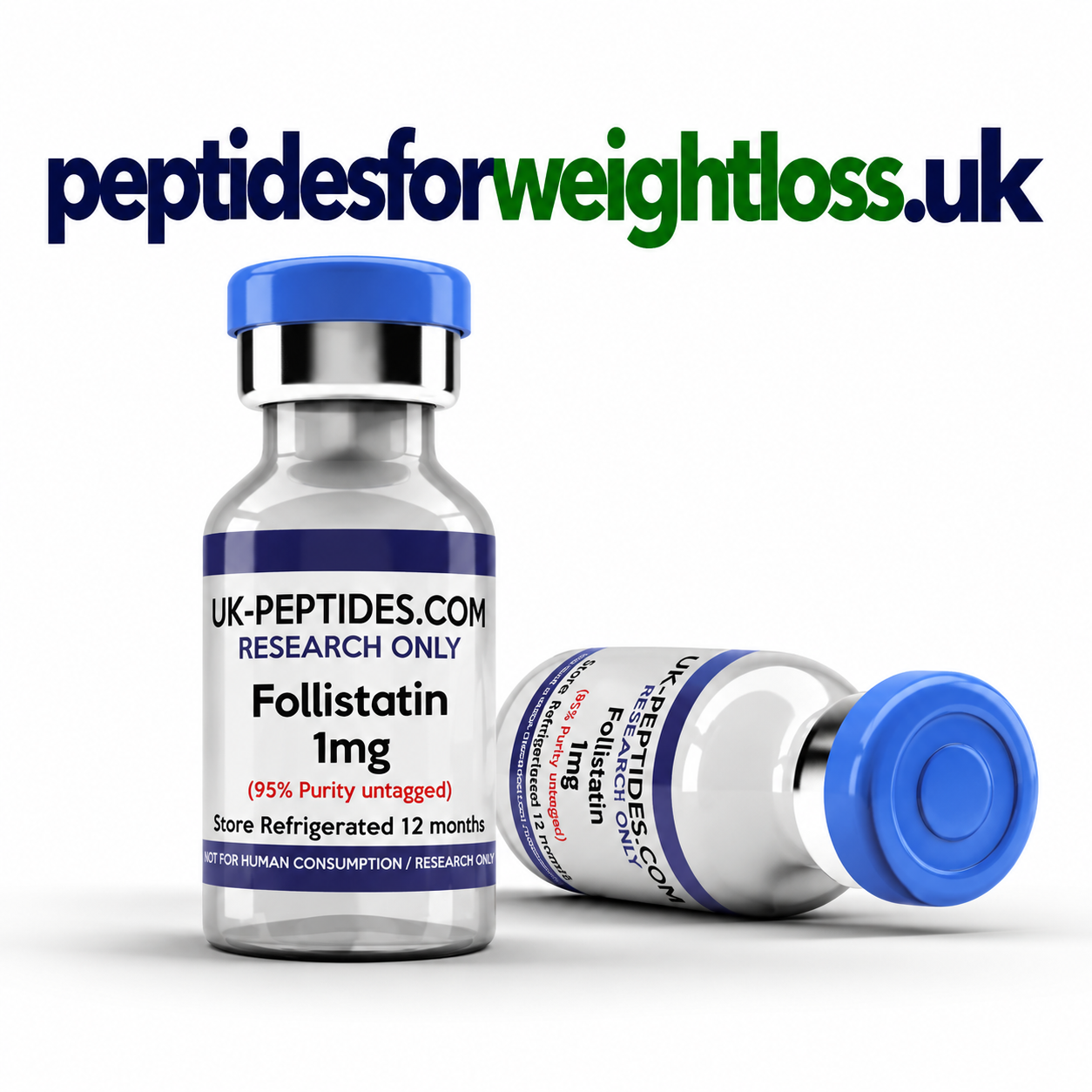
Follistatin 1mg 95% Purity Untagged Premium – Research Protein
Follistatin 1mg 95% Purity Untagged Premium is a research protein listing associated with investigations into myostatin signalling, activin regulation, skeletal muscle biology and transforming growth factor-beta (TGF-β) family pathways. Follistatin is a naturally occurring glycoprotein that binds selected growth factors and modifies their availability for receptor signalling.
Follistatin 1mg is relevant to experimental research involving muscle growth regulation, cellular differentiation, reproductive endocrinology and protein–ligand interactions. Its biological functions are more complex than simple myostatin inhibition because follistatin also interacts with activins and other related signalling proteins.
The product name identifies a labelled quantity of 1mg, a claimed purity of 95% and an untagged premium designation. These specifications should be confirmed using the manufacturer’s batch-specific certificate of analysis, protein identity testing and appropriate quality documentation.
Follistatin 1mg is intended to be described as laboratory research material. It is not an established weight-loss treatment, bodybuilding medicine or approved therapy for increasing human muscle mass.
What Is Follistatin 1mg?
Follistatin 1mg refers to a product containing a labelled quantity of 1mg of follistatin research material.
Follistatin is a naturally occurring protein encoded by the human FST gene. It was originally identified through research involving follicle-stimulating hormone regulation and activin-binding activity.
Subsequent investigations established that follistatin also interacts with myostatin, a protein involved in regulating skeletal muscle growth.
Follistatin has therefore become an important subject in muscle biology, endocrinology and cell-signalling research.
However, the precise identity of a commercial follistatin preparation depends on its isoform, amino acid sequence, expression system, folding, glycosylation and formulation.
Researchers evaluating Follistatin 1mg should confirm these details rather than assuming that all follistatin products are chemically identical.
Follistatin 1mg Product Specifications
- Product Name: Follistatin 1mg 95% Purity Untagged Premium
- Primary Research Protein: Follistatin
- Gene Symbol: FST
- Protein Classification: Secreted activin-binding glycoprotein
- Protein Family: Follistatin family
- Labelled Quantity: 1mg
- Advertised Purity: 95% — requires batch-specific verification
- Advertised Tag Status: Untagged — requires sequence or manufacturer confirmation
- Product Grade: Premium — commercial designation, not a recognised analytical standard
- Relevant Isoforms: FS288, FS303 and FS315
- Precursor Forms: FS317 and FS344
- Research Focus: Activin binding, myostatin regulation and skeletal muscle biology
- Protein Expression System: Not independently verified
- Exact Molecular Weight: Isoform- and glycosylation-dependent
- Biological Activity: Requires product-specific assay documentation
- Physical Form: Confirm with manufacturer
- Storage: Follow verified manufacturer instructions
- Intended Use: Laboratory research only
The specifications above distinguish established follistatin biology from claims about the particular Follistatin 1mg preparation. The exact protein isoform and batch characteristics must be confirmed independently.
Understanding Follistatin Protein Structure
Follistatin is a relatively large, structurally complex protein containing multiple domains involved in binding other signalling proteins.
Unlike short synthetic peptides, follistatin contains numerous amino acid residues and requires appropriate protein folding to support its biological functions.
Follistatin also contains cysteine-rich domains and disulfide bonds that contribute to its three-dimensional structure.
Some recombinant preparations are glycosylated, meaning carbohydrate groups are attached to the protein.
These structural characteristics can influence molecular weight, stability and biological activity.
Follistatin 1mg research material should therefore be characterised using methods appropriate for recombinant proteins rather than relying exclusively on simple peptide purity measurements.
How Does Follistatin Work?
Follistatin functions primarily as a binding protein that regulates the availability of selected extracellular signalling molecules.
Its best-characterised interactions include binding to activin A and other members of the TGF-β superfamily.
Follistatin can also bind myostatin, also called growth differentiation factor 8 (GDF-8).
By binding these ligands, follistatin may prevent them from interacting with their normal cell-surface receptors.
This process can modify downstream signalling pathways, including pathways associated with SMAD proteins.
However, follistatin does not selectively inhibit myostatin alone.
Its wider binding activity is important because activin signalling contributes to reproductive, endocrine, inflammatory and tissue-regulatory processes.
Scientific Research Into Follistatin 1mg
1. Follistatin 1mg and Myostatin Inhibition Research
Myostatin is a member of the TGF-β superfamily involved in restricting skeletal muscle growth.
It is produced primarily in skeletal muscle and participates in signalling pathways that regulate muscle development and maintenance.
Follistatin can bind myostatin and reduce its ability to activate relevant receptors.
Preclinical research has examined whether modifying this signalling pathway influences skeletal muscle mass.
However, evidence of myostatin inhibition in laboratory models does not establish that Follistatin 1mg increases muscle mass in humans.
2. Follistatin and Activin A Research
Activin A is a signalling protein involved in cellular differentiation, reproductive biology and several other physiological processes.
Follistatin is widely recognised for its ability to bind activin A and limit activin-dependent receptor activation.
These interactions have been investigated in biochemical binding assays and cellular signalling studies.
Activin-binding activity is an important part of follistatin’s molecular identity.
Researchers should therefore avoid describing follistatin as a compound that acts exclusively on muscle tissue.
3. Follistatin 1mg and Skeletal Muscle Research
Skeletal muscle development involves coordinated processes of protein synthesis, cellular differentiation and growth-factor signalling.
Myostatin is one of several molecules involved in regulating these processes.
Follistatin has been investigated in animal models to determine how altering myostatin-related signalling influences muscle tissue.
Selected studies involving follistatin gene expression reported increases in muscle mass and strength-related outcomes.
However, these experiments involved specific genetic interventions and should not be interpreted as evidence that externally supplied Follistatin 1mg has equivalent effects.
4. Follistatin and SMAD Signalling Research
SMAD proteins participate in intracellular signalling downstream of several TGF-β family receptors.
Myostatin and activin can influence SMAD2/3-related signalling pathways.
Follistatin may reduce ligand availability before receptor activation occurs.
Researchers use these pathways to investigate the relationship between extracellular growth factors and cellular responses.
Follistatin 1mg is relevant to this research area when the supplied protein has verified ligand-binding activity.
5. Follistatin 1mg and Muscle Regeneration Research
Muscle regeneration involves satellite cells, inflammatory responses, extracellular signalling and tissue repair.
Follistatin-related pathways have been investigated in experimental models of muscle damage and regeneration.
These investigations help researchers understand how growth-factor signalling influences muscle tissue.
However, changes in experimental regeneration markers do not establish clinical recovery benefits in humans.
6. Follistatin and Protein–Ligand Binding Research
Protein–ligand interactions occur when a protein binds another molecule through specific structural and chemical interactions.
Follistatin binds selected members of the TGF-β growth-factor family.
Its binding characteristics depend partly on the follistatin isoform and the ligand being examined.
Researchers may investigate these interactions using validated biochemical assays.
The biological activity of Follistatin 1mg should be established using product-specific assay data rather than inferred from purity alone.
7. Follistatin 1mg and Endocrine Research
Follistatin was originally associated with regulation of follicle-stimulating hormone, commonly abbreviated FSH.
Activin can stimulate FSH-related processes in the pituitary gland.
Follistatin may influence this system by binding activin and limiting its biological availability.
This interaction is important in reproductive endocrinology.
It also demonstrates why systemic follistatin activity could have biological effects beyond skeletal muscle.
8. Follistatin and Reproductive Biology
Follistatin and activin are involved in signalling networks associated with reproductive tissues.
These networks contribute to processes involving ovarian and testicular function.
Different follistatin isoforms may have different tissue-binding characteristics.
These differences are relevant to research into local versus circulating protein activity.
However, findings involving one follistatin isoform should not automatically be attributed to another.
9. Follistatin 1mg and Gene Therapy Research
Follistatin has been investigated in experimental gene therapy programmes involving certain muscle disorders.
One approach uses viral vectors to introduce genetic instructions for producing a follistatin isoform.
Published clinical research has examined this approach in patients with Becker muscular dystrophy.
However, follistatin gene therapy is fundamentally different from supplying a purified follistatin protein.
The results of a gene therapy study cannot establish the effectiveness, pharmacokinetics or safety of a commercial Follistatin 1mg preparation.
10. Follistatin and Protein Expression Research
Recombinant protein expression involves producing a target protein using an engineered biological system.
Different expression systems can influence folding, glycosylation and other characteristics.
These differences may affect the biological activity of follistatin preparations.
Researchers should confirm the expression system and purification method used for Follistatin 1mg whenever such information is available.
11. Follistatin 1mg and Cellular Differentiation Research
Cellular differentiation is the process through which cells acquire specialised characteristics.
Activin and other TGF-β family signalling molecules participate in differentiation pathways.
Because follistatin can regulate the availability of selected ligands, it has been investigated in experimental differentiation systems.
However, effects depend on the cell type, ligand concentration and experimental conditions.
12. Follistatin and Cancer Biology Research
Activin and TGF-β family signalling are relevant to cancer biology and the tumour microenvironment.
Follistatin has been investigated in research involving tumour-associated signalling and cellular responses.
Its effects can vary across biological contexts.
Consequently, altering follistatin activity may have complex consequences that cannot be predicted from muscle-growth studies alone.
There is insufficient evidence to establish the long-term safety of unapproved follistatin protein administration in humans.
Follistatin 1mg vs Follistatin 344
Follistatin 344 refers to a precursor form containing 344 amino acids.
Following normal signal peptide processing, this precursor produces the mature FS315 isoform.
FS315 is associated with circulating follistatin activity.
However, a product labelled simply Follistatin 1mg does not automatically establish that it contains the FS344 precursor or mature FS315 protein.
The exact isoform should be confirmed through manufacturer documentation and appropriate analytical testing.
Follistatin FS315 vs FS288
FS315 and FS288 are two major mature follistatin isoforms.
- FS315: Contains 315 amino acid residues and an additional acidic C-terminal region.
- FS288: Contains 288 amino acid residues and exhibits stronger cell-surface association.
- Distribution: FS315 is predominantly associated with circulating follistatin, while FS288 is more strongly associated with tissue surfaces.
- Biological Properties: Isoform differences can influence ligand binding, localisation and downstream effects.
Researchers evaluating Follistatin 1mg should identify the supplied isoform before comparing results across experiments.
Follistatin 1mg vs Myostatin
Follistatin and myostatin are biologically different proteins.
Myostatin acts as a signalling ligand involved in limiting skeletal muscle growth.
Follistatin is a binding protein that can reduce the availability of myostatin and other signalling molecules.
Therefore, follistatin is not another name for myostatin.
They represent different components of a shared signalling network.
What Does 95% Purity Mean for Follistatin 1mg?
The 95% purity designation is a product specification that requires analytical confirmation.
Protein purity is commonly assessed using methods such as SDS-PAGE, size-exclusion chromatography or other validated analytical techniques.
Different analytical methods may measure different aspects of protein quality.
Importantly, a reported purity percentage does not establish correct folding, biological activity, sterility or the absence of endotoxins.
The advertised 95% purity of Follistatin 1mg should be supported by a batch-specific certificate of analysis identifying the test method and results.
What Does Untagged Follistatin Mean?
Recombinant proteins are sometimes produced with affinity tags that assist purification or detection.
Examples include polyhistidine tags and other engineered peptide sequences.
Untagged follistatin generally refers to a protein preparation without an intentionally retained purification or detection tag.
However, the term does not independently establish the exact amino acid sequence or confirm the absence of all engineered modifications.
Researchers should verify the tag status of Follistatin 1mg through supplier documentation.
Follistatin 1mg and Weight Management
Follistatin 1mg is not an established treatment for obesity or weight loss.
Although myostatin-related pathways influence skeletal muscle biology, changes in muscle mass do not automatically translate into clinically meaningful fat loss.
There is insufficient reliable evidence that a commercial Follistatin 1mg protein preparation safely reduces body fat or treats obesity in humans.
Follistatin 1mg Research Quality and Documentation
Important considerations when evaluating Follistatin 1mg include:
- Verification of the exact follistatin isoform
- Confirmation of the amino acid sequence
- Verification of the labelled 1mg quantity
- Batch-specific evidence supporting the claimed 95% purity
- Confirmation of untagged protein status
- Identification of the recombinant expression system
- Verification of protein folding and relevant disulfide bonds
- Characterisation of glycosylation where applicable
- Appropriate molecular weight analysis
- Protein identity testing
- Assessment of aggregation and degradation
- Product-specific biological activity data
- Batch-specific certificate of analysis
- Manufacturer and batch traceability
- Information about formulation components
- Verified storage and stability documentation
These considerations are particularly important for a complex protein such as follistatin because molecular identity and biological activity cannot be determined from product naming alone.
Storage and Handling of Follistatin 1mg
Follistatin 1mg should be stored according to verified manufacturer instructions.
Storage requirements depend on the protein isoform, physical form, formulation and stability characteristics.
Protein preparations may be sensitive to conditions that affect folding, aggregation or degradation.
Researchers should follow appropriate laboratory handling procedures and product-specific safety documentation.
Follistatin 1mg Safety and Scientific Limitations
Follistatin is involved in several biological signalling systems, including muscle regulation, reproductive endocrinology and cellular differentiation.
Alteration of these pathways may have effects beyond skeletal muscle tissue.
Important uncertainties include potential endocrine disruption, unintended changes in growth-factor signalling, immune responses and long-term biological effects.
Published studies involving follistatin gene therapy do not establish the safety of administering commercially supplied follistatin protein.
Follistatin 1mg is not an established approved medicine for muscle growth, athletic performance, weight management or bodybuilding.
Research-grade material should not be assumed suitable for human administration.
This information is intended for scientific and educational purposes only and does not provide human dosing recommendations or administration instructions.
Frequently Asked Questions About Follistatin 1mg
What is Follistatin 1mg?
Follistatin 1mg is a product listing for a follistatin research protein with a labelled quantity of 1mg.
What is follistatin?
Follistatin is a naturally occurring glycoprotein that binds activin and selected other growth factors, including myostatin.
Is follistatin a peptide or protein?
Follistatin is a protein composed of hundreds of amino acid residues, not a short synthetic peptide.
Does follistatin inhibit myostatin?
Follistatin can bind myostatin and reduce its receptor signalling in experimental systems.
Does Follistatin 1mg increase muscle mass?
There is insufficient clinical evidence that a commercially supplied Follistatin 1mg preparation safely increases muscle mass in humans.
What does 95% purity mean?
It is an advertised purity specification that should be verified using batch-specific analytical documentation.
What does untagged follistatin mean?
It generally refers to a recombinant protein without an intentionally retained purification or detection tag.
Is Follistatin 1mg the same as Follistatin 344?
Not necessarily. The supplied protein isoform must be verified before establishing equivalence.
What is the difference between FS315 and FS288?
FS315 is the longer mature isoform associated with circulating follistatin, while FS288 has stronger cell-surface association.
Is follistatin involved in hormone regulation?
Yes. Follistatin interacts with activin signalling, which participates in reproductive and endocrine processes.
Is Follistatin 1mg a weight-loss product?
No. Follistatin is not an established treatment for obesity or weight management.
Is Follistatin 1mg approved for human use?
A commercial research-grade follistatin protein preparation is not an established approved medicine for human muscle enhancement or weight loss.
Does 1mg represent a recommended dose?
No. The 1mg designation refers to the labelled quantity of material, not a recommended human dose.
Follistatin 1mg – Scientific Product Summary
Follistatin 1mg 95% Purity Untagged Premium is a research protein listing associated with investigations into activin binding, myostatin regulation and skeletal muscle biology.
Follistatin is a complex protein with several isoforms that differ in molecular structure and tissue distribution.
The advertised 95% purity and untagged status should be verified using batch-specific documentation, including protein identity and biological activity testing.
Researchers evaluating Follistatin 1mg should confirm the exact isoform, protein quality, formulation, labelled quantity and intended laboratory application.

Reviews
There are no reviews yet.