
Description
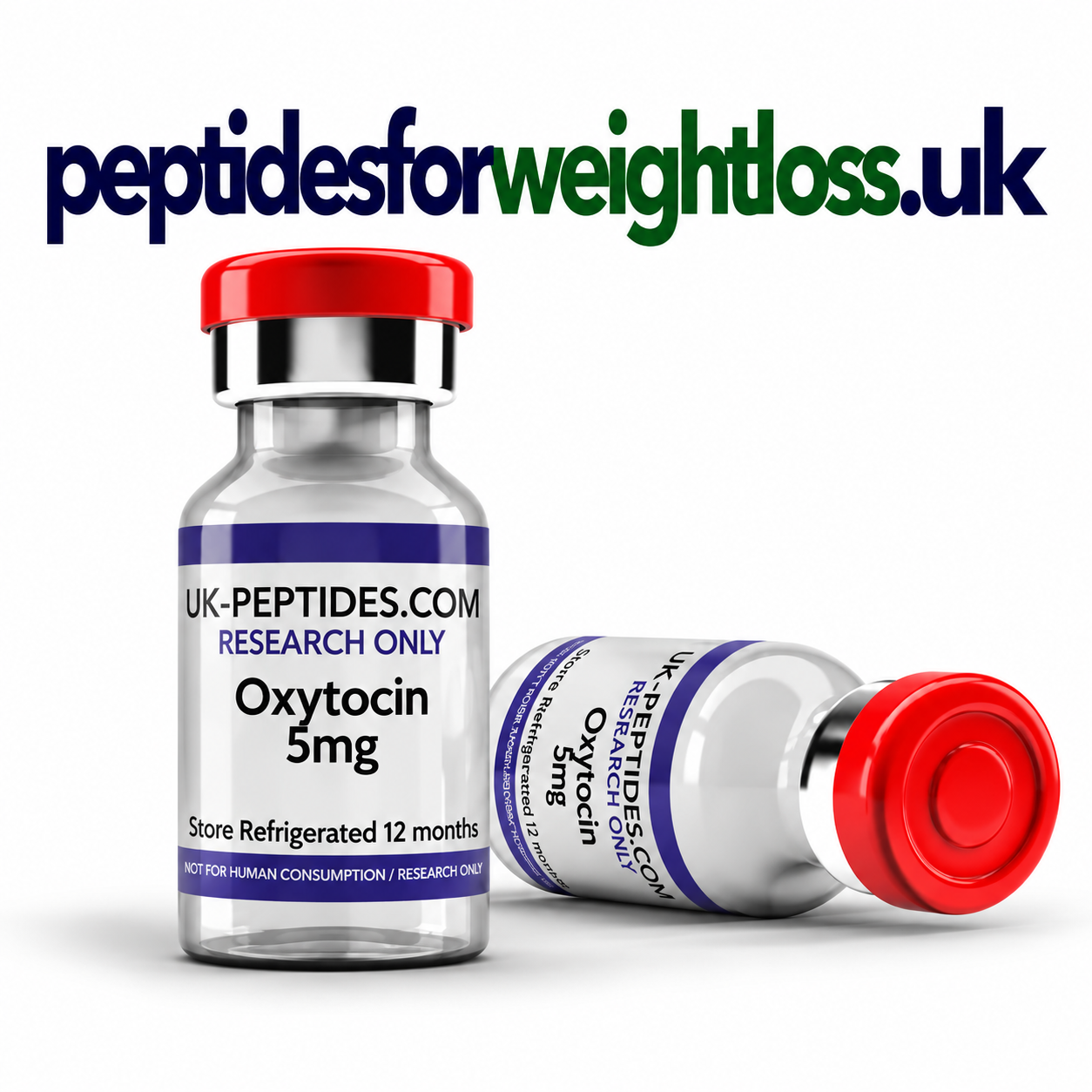
Oxytocin 5mg – Synthetic Oxytocin Research Peptide
Oxytocin 5mg is a peptide product associated with scientific investigations into oxytocin receptor signalling, neuroendocrine regulation and reproductive physiology. Oxytocin is a naturally occurring hormone composed of nine amino acids and is synthesised primarily in the hypothalamus.
As a synthetic research compound, oxytocin has attracted scientific attention because of its involvement in physiological processes ranging from uterine muscle activity and milk ejection to neural signalling and social behaviour.
This Oxytocin 5mg product page provides information about the peptide’s molecular characteristics, biological functions, research applications and important quality considerations.
What Is Oxytocin Peptide?
Oxytocin is a naturally occurring nonapeptide hormone produced by specialised neurons in the hypothalamus. It is released into the bloodstream from the posterior pituitary gland and also participates in signalling within the central nervous system.
Oxytocin interacts with specific receptors found in various tissues, including the uterus, mammary glands and parts of the brain.
Synthetic oxytocin has been developed for pharmaceutical and scientific purposes. However, approved oxytocin medicines are manufactured to defined pharmaceutical standards and should not be confused with independently marketed research peptides.
Oxytocin 5mg Product Specifications
- Product Name: Oxytocin 5mg
- Peptide Name: Oxytocin
- Classification: Nonapeptide hormone
- Labelled Quantity: 5mg
- Molecular Formula: C43H66N12O12S2
- Approximate Molecular Weight: 1007.19 g/mol
- Research Category: Peptide hormone research
- Primary Molecular Target: Oxytocin receptor (OXTR)
- Research Areas: Neuroendocrine signalling, reproductive physiology and behavioural neuroscience
- Product Purity: Requires manufacturer verification
- Storage Conditions: Follow verified product-specific instructions
Understanding the Oxytocin Hormone
Oxytocin belongs to a family of peptide hormones involved in physiological communication between the nervous system and peripheral organs.
Its molecular structure contains nine amino acids, including two cysteine residues connected by a disulfide bond. This cyclic structural feature is important to the peptide’s biological activity.
Oxytocin shares structural similarities with vasopressin, another hormone produced in the hypothalamus, although the two have distinct primary physiological functions.
Scientific Research Into Oxytocin
1. Oxytocin Receptor Signalling
Oxytocin binds to the oxytocin receptor, commonly abbreviated OXTR. This receptor belongs to the G protein-coupled receptor family and participates in intracellular signalling processes.
Researchers investigate oxytocin receptor activation to understand how hormonal signals influence cellular responses, smooth muscle activity and neuroendocrine communication.
2. Neuroendocrine Research
Oxytocin plays an established role in neuroendocrine physiology. Scientists study its synthesis, transport, release and receptor interactions to better understand communication between the hypothalamus, pituitary gland and peripheral tissues.
These investigations provide important information about hormone regulation and physiological responses.
3. Social Behaviour and Neuroscience
Oxytocin has received considerable scientific attention in behavioural neuroscience because of its possible involvement in social recognition, bonding and emotional processing.
Laboratory and clinical studies have explored relationships between oxytocin signalling and social behaviour. However, results in humans have been variable and context-dependent.
Oxytocin should not be described as a clinically proven treatment for loneliness, social anxiety or relationship difficulties based on these findings.
4. Reproductive Physiology
Oxytocin is involved in the regulation of uterine contractions and milk ejection. These are well-established physiological functions of the naturally occurring hormone.
Approved pharmaceutical formulations of synthetic oxytocin are used in specific obstetric settings under professional medical supervision.
These authorised clinical applications do not establish that an independently marketed Oxytocin 5mg research product is suitable for administration.
5. Hormone and Cellular Communication Research
Oxytocin is also relevant to investigations into hormone-receptor interactions, intracellular calcium signalling and physiological feedback mechanisms.
These research areas contribute to understanding how peptide hormones coordinate responses across different biological systems.
Oxytocin and Social Bonding: What Does the Research Show?
Oxytocin is sometimes described informally as the bonding hormone because of its involvement in social and reproductive behaviour.
Although scientific studies have identified associations between oxytocin signalling and certain social responses, the hormone’s effects are complex.
Human research has not established that administering oxytocin consistently improves trust, emotional connection or social functioning.
Experimental findings should therefore be interpreted within the context of study design, participant characteristics and the specific formulation investigated.
Understanding the Oxytocin 5mg Label
The 5mg designation refers to the labelled amount of peptide material. It does not represent a recommended human dose or confirm pharmaceutical quality.
Research peptide products may differ in formulation, chemical purity, excipients and manufacturing standards.
Researchers should verify the precise molecular identity and batch-specific documentation before evaluating a product for laboratory use.
Research Quality and Product Documentation
When assessing Oxytocin 5mg research material, important considerations include:
- Verified oxytocin molecular identity
- Batch-specific certificate of analysis
- Analytical purity testing
- Manufacturer and batch traceability
- Accurate labelled peptide quantity
- Formulation and excipient information
- Verified storage and stability requirements
- Clearly stated intended-use restrictions
These details help researchers distinguish verified product characteristics from unsupported quality or pharmaceutical claims.
Storage and Handling Considerations
Oxytocin research materials should be stored and handled according to the manufacturer’s verified specifications.
Storage conditions may vary depending on the product’s physical form, formulation, packaging and stability data.
Researchers should not assume that a research peptide has the same storage requirements as an approved pharmaceutical oxytocin formulation.
Safety and Regulatory Considerations
Oxytocin is a biologically active hormone capable of producing significant physiological effects. Approved oxytocin medicines carry important warnings concerning excessive uterine contractions, cardiovascular complications and water intoxication.
Pharmaceutical oxytocin is administered under medical supervision when clinically indicated. The safety and suitability of an independently marketed 5mg peptide product cannot be inferred from the approval of another formulation.
Oxytocin 5mg should not be promoted as a proven treatment for anxiety, depression, sexual dysfunction, weight loss or other conditions without appropriate clinical evidence and regulatory authorisation.
This product information is intended for scientific and educational purposes and does not provide medical advice, dosing recommendations or administration instructions.
Frequently Asked Questions About Oxytocin 5mg
What is Oxytocin 5mg?
Oxytocin 5mg is a product listing for a labelled quantity of the oxytocin peptide hormone, which is associated with research into neuroendocrine and reproductive physiology.
What is oxytocin made of?
Oxytocin consists of nine amino acids arranged in a peptide structure containing a disulfide bond.
What is oxytocin studied for?
Oxytocin is studied in relation to hormone signalling, reproductive physiology, social behaviour, receptor biology and neuroendocrine communication.
Is oxytocin the same as vasopressin?
No. Oxytocin and vasopressin are structurally related peptide hormones with different principal physiological functions.
Does oxytocin improve social bonding?
Oxytocin participates in biological processes associated with social behaviour, but clinical evidence does not establish consistent social-bonding benefits from administering oxytocin.
Is Oxytocin 5mg approved for medical use?
Certain pharmaceutical oxytocin formulations are approved for specific medical indications. A separately marketed 5mg research peptide product is not automatically an approved medicine.
Is oxytocin used for weight loss?
Oxytocin has been investigated in metabolic research, but it is not an established approved weight-loss treatment.
What does 5mg mean?
The 5mg designation describes the labelled quantity of peptide material. It does not establish a recommended dose, purity or suitability for human administration.
What documentation should accompany a research peptide?
Relevant documentation may include peptide identity, purity testing, batch information, formulation details and verified storage instructions.
Oxytocin 5mg – Product Summary
Oxytocin 5mg is a peptide product associated with research into oxytocin receptor signalling, neuroendocrine physiology, reproductive biology and behavioural neuroscience.
Its nine-amino-acid structure and established physiological functions make oxytocin an important subject of hormone research.
Researchers should verify product identity, purity, formulation, batch documentation and intended use. The clinical approval of specific pharmaceutical oxytocin products does not establish the safety or effectiveness of independently marketed research peptide preparations.
Reviews
There are no reviews yet.