
Description
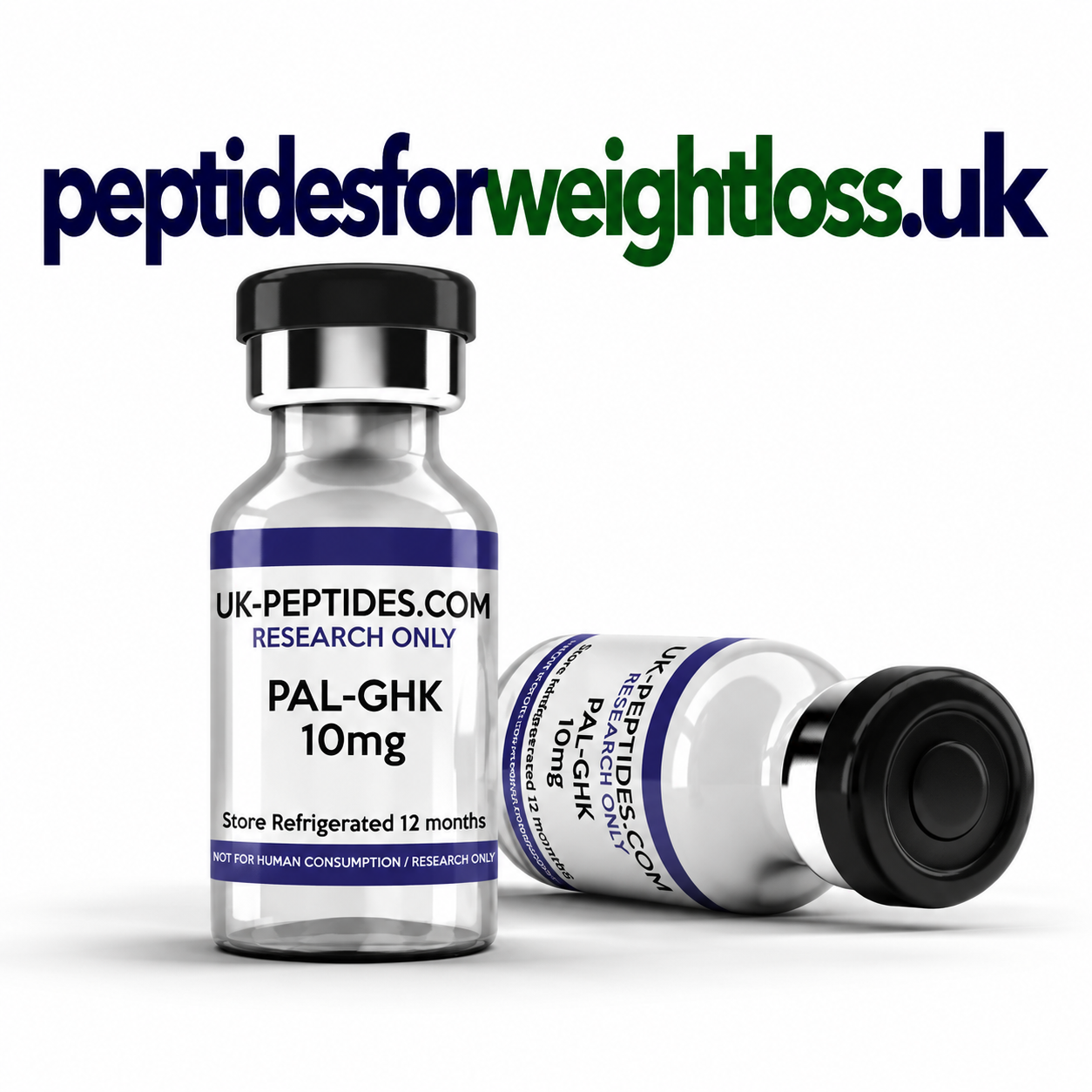
PAL-GHK 10mg – Palmitoyl Tripeptide-1 Research Peptide
PAL-GHK 10mg is a palmitoylated tripeptide associated with scientific research into skin biology, extracellular matrix signalling and cosmetic peptide development. Also known as Palmitoyl Tripeptide-1, PAL-GHK consists of the amino acid sequence Gly-His-Lys (GHK) modified with a palmitoyl group.
This structural modification distinguishes PAL-GHK from unmodified GHK and its copper complex, GHK-Cu. PAL-GHK has attracted interest in cosmetic formulation research because of its lipid-associated molecular properties and its potential interactions with biological pathways involved in skin structure.
Explore the molecular characteristics, scientific research background and product quality considerations associated with PAL-GHK 10mg.
What Is PAL-GHK Peptide?
PAL-GHK is a synthetic lipopeptide formed by attaching a palmitoyl group to the N-terminus of the GHK tripeptide. Its internationally recognised cosmetic ingredient name is Palmitoyl Tripeptide-1.
The original GHK sequence consists of glycine, histidine and lysine. Adding a fatty acid-derived palmitoyl group changes the peptide’s physicochemical properties, particularly its affinity for lipid-rich environments.
PAL-GHK is studied in cosmetic chemistry and skin-related research, including investigations into extracellular matrix components and peptide delivery.
PAL-GHK 10mg Product Specifications
- Product Name: PAL-GHK 10mg
- Alternative Name: Palmitoyl Tripeptide-1
- Peptide Sequence: Pal-Gly-His-Lys
- Classification: Synthetic palmitoylated tripeptide
- Labelled Quantity: 10mg
- Molecular Formula: C30H54N6O5
- Approximate Molecular Weight: 578.79 g/mol
- CAS Number: 147732-56-7
- Research Category: Cosmetic peptide and skin biology research
- Research Focus: Extracellular matrix signalling and peptide formulation
- Product Purity: Confirm using batch-specific analytical documentation
Understanding the Palmitoyl Tripeptide-1 Structure
PAL-GHK combines a short amino acid sequence with a lipid-derived molecular group. This structure has been investigated as a method of modifying the delivery characteristics of the GHK peptide.
Unmodified GHK is relatively hydrophilic, while palmitoylation increases the lipid affinity of the molecule.
These differences are relevant to researchers investigating how peptide modifications influence formulation behaviour and interactions with biological membranes.
However, improved lipid affinity does not automatically demonstrate superior clinical effectiveness or successful penetration into deeper skin layers.
Scientific Research Into PAL-GHK 10mg
1. Collagen and Extracellular Matrix Research
One of the principal areas of PAL-GHK research involves the extracellular matrix, the network of proteins and other molecules that provides structural support to tissues.
Collagen, elastin and glycosaminoglycans are important components of this matrix.
Experimental studies involving PAL-GHK and related peptides have examined collagen-associated cellular responses and the behaviour of skin fibroblasts.
These investigations provide a scientific basis for further cosmetic research, although evidence of clinical benefits from PAL-GHK alone remains limited.
2. Skin Fibroblast Research
Fibroblasts are cells responsible for producing and maintaining many extracellular matrix components.
Researchers investigate how cosmetic peptides interact with fibroblast signalling pathways and influence the production of structural proteins.
PAL-GHK is relevant to these studies because its GHK sequence is associated with extracellular matrix-related signalling.
However, findings involving unmodified GHK or GHK-Cu should not automatically be attributed to PAL-GHK.
3. Cosmetic Peptide Formulation Research
PAL-GHK has been incorporated into cosmetic formulations designed to investigate the appearance and condition of ageing skin.
Its palmitoyl modification is intended to influence its compatibility with lipid-containing formulations.
Researchers have examined PAL-GHK in topical products, frequently alongside other cosmetic ingredients.
Because many studies evaluate combined formulations, the independent contribution of PAL-GHK can be difficult to determine.
4. Skin Ageing and Appearance Research
Skin ageing involves changes in collagen organisation, elasticity, hydration and extracellular matrix composition.
Cosmetic peptide research examines whether selected ingredients influence biological processes associated with these changes.
PAL-GHK is one of several signal peptides investigated in this field.
Although preliminary findings have attracted interest, high-quality independent clinical evidence is insufficient to establish reliable anti-ageing benefits from PAL-GHK alone.
5. Peptide Delivery and Lipid Modification
Another research area involves understanding how attaching lipid groups to peptides affects their physical and chemical behaviour.
Palmitoylation can change a peptide’s affinity for lipid-rich environments, which may influence its distribution within cosmetic formulations.
PAL-GHK provides a useful example of a modified peptide investigated in skin delivery research.
PAL-GHK vs GHK-Cu: What Is the Difference?
PAL-GHK and GHK-Cu are chemically distinct compounds derived from the GHK amino acid sequence.
- PAL-GHK: A palmitoylated form of GHK investigated primarily in cosmetic formulations and skin biology.
- GHK-Cu: A copper complex of GHK investigated in separate research involving copper-dependent biological processes.
- Unmodified GHK: The original tripeptide sequence Gly-His-Lys without the palmitoyl group or bound copper.
These compounds differ in molecular composition and physicochemical behaviour. Their experimental findings should not be treated as interchangeable.
PAL-GHK and Cosmetic Skin Research
Palmitoyl Tripeptide-1 has been studied as an ingredient in cosmetic products concerned with the appearance of fine lines, skin texture and structural changes associated with ageing.
Research includes laboratory investigations and limited studies involving finished cosmetic formulations.
These findings do not establish that a standalone PAL-GHK 10mg research product can safely or effectively treat wrinkles, repair damaged skin or reverse ageing.
Understanding the PAL-GHK 10mg Label
The 10mg designation describes the labelled quantity of peptide material. It does not establish a recommended dose, cosmetic formulation concentration or suitability for human administration.
Researchers should confirm the peptide’s molecular identity, composition, purity and formulation using reliable product-specific documentation.
Research Quality and Product Documentation
Important considerations when evaluating PAL-GHK research material include:
- Verified Pal-Gly-His-Lys molecular identity
- Batch-specific certificate of analysis
- Analytical purity and composition testing
- Manufacturer and batch traceability
- Accurate labelled peptide quantity
- Packaging integrity
- Verified storage and stability information
- Clearly stated intended-use restrictions
These factors help distinguish verified product characteristics from unsupported manufacturing or performance claims.
Storage and Handling Considerations
PAL-GHK research materials should be stored and handled according to the manufacturer’s verified product specifications.
Storage requirements may depend on the exact formulation, packaging, physical state and stability data.
Researchers should not assume that all PAL-GHK products share identical storage conditions.
Safety and Research Limitations
PAL-GHK has been assessed as a cosmetic ingredient in the context of specified topical formulations and concentrations.
However, this does not establish the safety of a standalone 10mg research peptide product for direct application, injection or other forms of human administration.
PAL-GHK is not an established approved medicine for wound healing, skin disorders, hair loss or weight management.
This product information is intended for scientific and educational purposes and does not provide medical advice or instructions for human administration.
Frequently Asked Questions About PAL-GHK 10mg
What is PAL-GHK 10mg?
PAL-GHK 10mg is a product listing for a palmitoylated GHK tripeptide commonly known as Palmitoyl Tripeptide-1.
What does PAL-GHK stand for?
PAL-GHK refers to palmitoyl-glycyl-histidyl-lysine, a lipid-modified version of the GHK tripeptide.
Is PAL-GHK the same as GHK-Cu?
No. PAL-GHK contains a palmitoyl group, while GHK-Cu is a copper complex of GHK. They have different chemical structures and research characteristics.
What is PAL-GHK studied for?
PAL-GHK is investigated in cosmetic peptide research, extracellular matrix biology, skin fibroblast studies and peptide formulation development.
Does PAL-GHK increase collagen production?
Experimental research has examined collagen-related responses involving PAL-GHK. However, clinical evidence remains insufficient to establish consistent collagen-related benefits from PAL-GHK alone in humans.
Is PAL-GHK an anti-ageing peptide?
PAL-GHK is used in cosmetic research related to skin ageing, but its independent clinical effectiveness for reducing visible ageing has not been conclusively established.
Can PAL-GHK be injected?
PAL-GHK is not an approved injectable medicine. Cosmetic ingredient safety assessments do not establish safety for injection.
What does PAL-GHK 10mg mean?
The 10mg designation indicates the labelled quantity of peptide material and does not represent a recommended dose or cosmetic formulation concentration.
What is the difference between PAL-GHK and Matrixyl 3000?
PAL-GHK is an individual peptide ingredient. Matrixyl 3000 is a commercial cosmetic ingredient blend containing Palmitoyl Tripeptide-1 and Palmitoyl Tetrapeptide-7.
PAL-GHK 10mg – Product Summary
PAL-GHK 10mg is a synthetic palmitoylated tripeptide associated with research into skin biology, extracellular matrix signalling and cosmetic peptide formulations.
Its modified GHK structure makes it relevant to investigations of peptide lipid affinity, skin-related cellular processes and cosmetic ingredient development.
Researchers should verify product identity, purity, batch documentation and intended use before selecting PAL-GHK for laboratory investigation.
Reviews
There are no reviews yet.