
Description
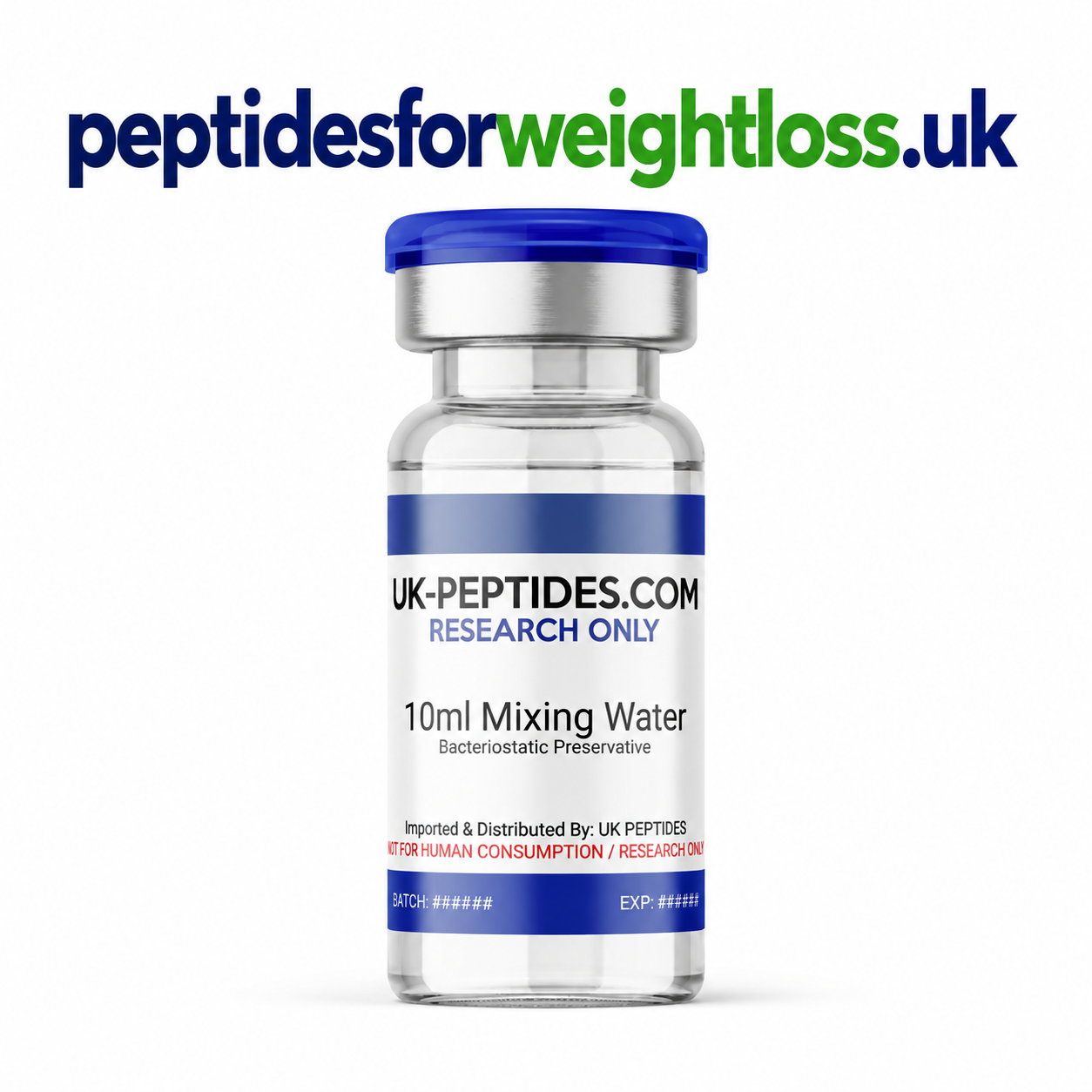
10ml Bacteriostatic Mixing Water – Preserved Research Mixing Solution
10ml Bacteriostatic Mixing Water is a water-based mixing solution associated with laboratory preparation, dilution and research applications. Bacteriostatic water typically contains an antimicrobial preservative, commonly benzyl alcohol, which helps inhibit the growth of susceptible microorganisms under appropriate conditions.
Water-based mixing solutions are used in laboratory environments where researchers need to evaluate compound solubility, compatibility and solution preparation. However, the suitability of any bacteriostatic mixing water depends on its verified formulation, quality standards and intended-use classification.
This 10ml Bacteriostatic Mixing Water product description covers the scientific properties of preserved water solutions, laboratory considerations, product specifications, safety information and frequently asked questions.
What Is 10ml Bacteriostatic Mixing Water?
Bacteriostatic mixing water is a water-based preparation containing a substance intended to inhibit microbial growth.
Benzyl alcohol is a commonly used preservative in recognised bacteriostatic water formulations. Its presence can help limit the growth of susceptible bacteria, but it does not guarantee that a contaminated solution remains safe or sterile.
The term bacteriostatic refers to inhibition of bacterial growth rather than the complete elimination of all microorganisms.
It is important to distinguish laboratory mixing water from licensed Bacteriostatic Water for Injection. Medical-grade products must meet specific manufacturing, sterility, labelling and regulatory requirements.
10ml Bacteriostatic Mixing Water Product Specifications
- Product Name: 10ml Bacteriostatic Mixing Water
- Product Category: Laboratory mixing solutions
- Labelled Volume: 10ml
- Base Component: Water
- Preservative: Confirm from manufacturer documentation
- Benzyl Alcohol Concentration: Not independently verified
- Water Molecular Formula: H2O
- Water Molecular Weight: Approximately 18.02 g/mol
- Research Applications: Compatible laboratory dilution and solution preparation
- Sterility: Requires product-specific verification
- Packaging: Confirm container type and closure
- Storage: Follow verified manufacturer instructions
How Does Bacteriostatic Water Work?
The bacteriostatic properties of preserved water arise from an antimicrobial ingredient added to the formulation.
In many established pharmaceutical products, this ingredient is benzyl alcohol.
Benzyl alcohol can interfere with the growth of susceptible microorganisms, helping preserve a formulation when used under validated conditions.
However, the presence of a preservative does not replace appropriate manufacturing controls, packaging integrity, laboratory hygiene or microbiological quality testing.
A preserved solution should never be assumed sterile simply because it is labelled bacteriostatic.
Understanding Benzyl Alcohol in Bacteriostatic Water
Benzyl alcohol is an aromatic alcohol used in several industrial, laboratory and pharmaceutical applications.
In certain licensed Bacteriostatic Water for Injection products, benzyl alcohol is included as an antimicrobial preservative.
Examples of recognised formulations contain 0.9% or 1.1% benzyl alcohol, but the actual concentration varies by product.
For this 10ml Bacteriostatic Mixing Water listing, the exact preservative concentration must be confirmed from the manufacturer’s label or technical documentation.
Researchers should not assume that all bacteriostatic water products have identical chemical composition or regulatory status.
Laboratory Applications of 10ml Bacteriostatic Mixing Water
1. Laboratory Solution Preparation
Water-based mixing solutions are used in laboratory research where compounds must be evaluated in a liquid environment.
The suitability of a particular solution depends on the chemical characteristics of the material being studied and the requirements of the experimental procedure.
Researchers should confirm that any preservative present will not interfere with the compound or analytical method.
2. Research Compound Compatibility
Different research compounds have different solubility and stability characteristics.
Some substances may be compatible with water-based solutions, while others require specific buffers, solvents or controlled pH conditions.
Bacteriostatic mixing water is not a universal solvent for all peptides, proteins or other research materials.
Compound-specific documentation should guide solvent selection.
3. Peptide Solubility Research
In peptide research, the surrounding solvent can influence molecular charge, aggregation, solubility and stability.
Water-based preparations may be relevant to laboratory studies involving selected peptides.
However, preservatives such as benzyl alcohol can affect some biological materials, making compatibility testing important.
Researchers should distinguish the physical dissolution of a peptide from the maintenance of its biological activity and long-term stability.
4. Analytical Laboratory Applications
Preserved aqueous solutions may be evaluated in analytical laboratory procedures when the formulation is compatible with the method.
The presence of benzyl alcohol or other additives can affect measurements and introduce unwanted analytical signals.
For this reason, researchers should verify the complete ingredient composition before using preserved mixing water in analytical work.
5. Research Formulation Studies
Laboratory formulation research may examine how preservatives influence solution stability, microbial growth and compatibility with other ingredients.
Bacteriostatic mixing water can provide a subject for investigations into preserved aqueous systems.
Any claims about preservative effectiveness, stability or shelf life should be supported by testing of the actual formulation.
Bacteriostatic Water vs Sterile Water
Bacteriostatic water and preservative-free sterile water are different types of preparations.
- Bacteriostatic Water: A preserved aqueous preparation designed to inhibit microbial growth under specified conditions.
- Sterile Water: Water manufactured and tested to meet defined sterility requirements, which may be supplied without an antimicrobial preservative.
- Laboratory Purified Water: Water prepared to meet particular laboratory purity standards, without necessarily meeting pharmaceutical sterility requirements.
These products are not automatically interchangeable. Their suitability depends on the specific application and verified quality standards.
Bacteriostatic Water vs Acetic Acid 0.6%
Bacteriostatic mixing water and Acetic Acid 0.6% are different solutions with different chemical characteristics.
Acetic Acid 0.6% is a dilute acidic preparation that may be investigated for its effects on peptide solubility and solution chemistry.
Bacteriostatic mixing water is associated with preservative-containing aqueous formulations.
The two products should not be substituted for one another without confirming the chemical compatibility and requirements of the intended laboratory procedure.
Understanding the 10ml Product Volume
The 10ml designation refers to the labelled volume of liquid supplied.
It does not independently establish preservative concentration, sterility, container suitability or pharmaceutical quality.
For accurate laboratory documentation, researchers should confirm the actual fill volume, ingredient composition and batch identification.
Research Quality and Product Documentation
Important considerations when evaluating bacteriostatic mixing water include:
- Verified ingredient composition
- Confirmed preservative identity and concentration
- Accurate labelled volume
- Manufacturer and batch traceability
- Batch-specific quality documentation
- Verified sterility status, if claimed
- Microbiological quality information
- Container and closure specifications
- Packaging integrity
- Validated storage conditions
- Expiry date and stability information
- Clearly stated intended-use classification
These details help laboratories assess whether the supplied solution meets the requirements of their intended research application.
Storage and Handling Considerations
10ml Bacteriostatic Mixing Water should be stored according to the manufacturer’s verified instructions.
Appropriate storage conditions depend on the product formulation, packaging, preservative system and available stability data.
Do not assume that a particular refrigeration requirement, room-temperature storage range or period of usability after opening applies to every product.
Inspect the container before use and follow the laboratory’s applicable safety and contamination-control procedures.
Safety and Intended-Use Limitations
The safety of bacteriostatic mixing water depends on its precise formulation, quality standards and intended use.
Benzyl alcohol-containing pharmaceutical preparations carry important warnings, including potential toxicity in neonates.
Bacteriostatic water is not intended for direct use as a fluid replacement, and products intended for injection must meet applicable pharmaceutical requirements.
Unless the specific product has verified pharmaceutical authorisation and appropriate labelling, it must not be represented as suitable for injection or other human administration.
This product description provides scientific and educational information only. It does not provide medical advice or instructions for administering research compounds.
Frequently Asked Questions About 10ml Bacteriostatic Mixing Water
What is 10ml Bacteriostatic Mixing Water?
It is a product listing for 10ml of preserved water-based mixing solution. Its exact composition should be confirmed from the manufacturer.
What is bacteriostatic water used for?
Depending on its verified quality and regulatory classification, bacteriostatic water may be used in compatible laboratory preparation or as a pharmaceutical diluent for specifically authorised applications.
Does bacteriostatic water contain benzyl alcohol?
Many recognised formulations contain benzyl alcohol, but the exact preservative and concentration must be confirmed for the individual product.
Is bacteriostatic water the same as sterile water?
No. Bacteriostatic water contains a preservative, whereas preservative-free sterile water does not.
Is all bacteriostatic water sterile?
No. Sterility is a product-specific quality attribute that requires appropriate manufacturing controls and verification.
Can bacteriostatic water be used with every peptide?
No. Peptide compatibility depends on the compound’s solubility, stability and interactions with the solution’s ingredients.
Is bacteriostatic water the same as Acetic Acid 0.6%?
No. Acetic Acid 0.6% is an acidic solution, while bacteriostatic mixing water is a preserved aqueous preparation.
What does 10ml mean?
It refers to the labelled volume of the solution.
How should bacteriostatic mixing water be stored?
Follow the storage conditions verified for the specific product by its manufacturer.
Is this product suitable for injection?
Suitability for injection cannot be determined from the product name. It requires verified pharmaceutical quality, regulatory status and appropriate labelling.
10ml Bacteriostatic Mixing Water – Product Summary
10ml Bacteriostatic Mixing Water is a preserved aqueous solution associated with laboratory preparation, compatibility research and solution chemistry.
Its chemical characteristics depend on the water quality, preservative system and manufacturing specifications.
Before selecting bacteriostatic mixing water for a particular application, verify its ingredient composition, preservative concentration, sterility status, batch documentation, packaging and intended-use classification.
Reviews
There are no reviews yet.