
Description
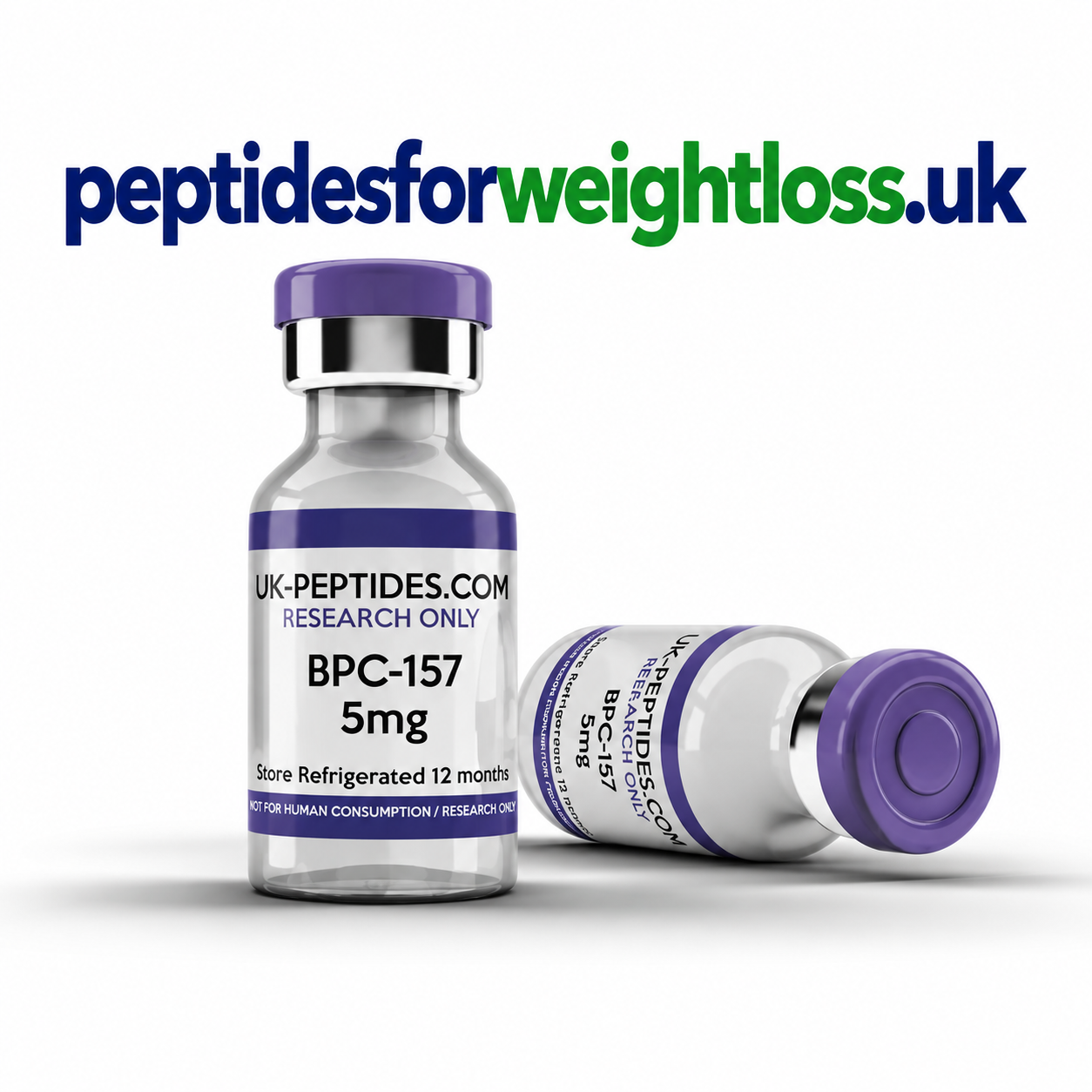
BPC-157 5mg – Pentadecapeptide for Laboratory Research
BPC-157 5mg is a synthetic research peptide associated with scientific investigations into gastrointestinal tissue biology, tendon and ligament injury models, inflammatory signalling and cellular responses to tissue damage. Also known as Bepecin or Body Protection Compound-157, BPC-157 is a linear pentadecapeptide consisting of 15 amino acid residues.
The peptide has attracted considerable scientific interest because preclinical studies have examined its activity in experimental models involving connective tissue, the digestive system, blood vessel formation and injury-related cellular responses.
Although some animal studies have reported encouraging findings, BPC-157 remains investigational. Published human research is extremely limited, and its safety, effectiveness and appropriate clinical applications have not been established.
This BPC-157 5mg product description provides an overview of the peptide’s molecular structure, proposed biological mechanisms, scientific research applications, evidence limitations and important product quality considerations.
What Is BPC-157 Peptide?
BPC-157 is a synthetic peptide composed of 15 amino acids. Its name is associated with research into a gastric protein fraction historically described as Body Protection Compound.
The peptide is commonly identified by the amino acid sequence Gly-Glu-Pro-Pro-Pro-Gly-Lys-Pro-Ala-Asp-Asp-Ala-Gly-Leu-Val.
Researchers have investigated BPC-157 in experimental systems involving the gastrointestinal tract, connective tissue, vascular signalling and inflammatory responses.
It is important to distinguish these preclinical investigations from established medical treatments. BPC-157 is not a clinically validated medicine for repairing injuries or treating gastrointestinal disease.
BPC-157 5mg Product Specifications
- Product Name: BPC-157 5mg
- Alternative Name: Bepecin
- Research Name: Body Protection Compound-157
- Peptide Classification: Synthetic pentadecapeptide
- Peptide Length: 15 amino acids
- Reference Sequence: Gly-Glu-Pro-Pro-Pro-Gly-Lys-Pro-Ala-Asp-Asp-Ala-Gly-Leu-Val
- One-Letter Sequence: GEPPPGKPADDAGLV
- Reference Molecular Formula: C62H98N16O22 (unmodified free peptide)
- Approximate Molecular Weight: 1,419.5 g/mol (unmodified free peptide)
- CAS Number: 137525-51-0 (reference free peptide)
- Labelled Quantity: 5mg
- Research Category: Experimental tissue injury and peptide signalling research
- Research Applications: Gastrointestinal biology, connective tissue models and inflammatory signalling
- Salt Form: Requires manufacturer verification
- Purity: Refer to batch-specific analytical documentation
- Physical Form: Confirm with manufacturer
- Storage: Follow verified manufacturer instructions
- Intended Use: Laboratory research
The molecular formula and molecular weight above describe the unmodified free peptide. Commercially supplied acetate or other salt forms may have different analytical specifications.
Understanding the Molecular Structure of BPC-157
BPC-157 contains 15 amino acid residues joined through peptide bonds to form a linear molecular structure.
Its sequence includes three consecutive proline residues near the N-terminal region. Proline has a distinctive cyclic structure that influences peptide backbone flexibility.
Researchers have investigated whether these structural characteristics contribute to the peptide’s behaviour in experimental biological environments.
The BPC-157 sequence does not contain cysteine residues and therefore does not form conventional intramolecular disulfide bonds.
Because molecular structure can affect experimental activity, researchers should verify the exact sequence, terminal groups and salt form of the supplied material.
How Does BPC-157 Work?
The precise biological mechanism of BPC-157 has not been conclusively established.
Preclinical investigations have proposed interactions with pathways associated with nitric oxide signalling, vascular endothelial growth factor activity and cellular responses to tissue injury.
Some studies have examined signalling involving VEGFR2, Akt and endothelial nitric oxide synthase (eNOS).
Other investigations have considered how BPC-157 may influence inflammatory markers and connective tissue responses in animal models.
However, these findings do not establish a single validated receptor target or demonstrate that the same effects occur in humans.
Scientific Research Into BPC-157
1. Tendon and Ligament Research
Tendons connect muscles to bones, while ligaments connect bones to one another and help stabilise joints.
Both tissues have specialised collagen-rich structures and can be affected by mechanical injury.
BPC-157 has been investigated in animal studies involving tendon and ligament damage.
Researchers have examined experimental outcomes such as tissue organisation, collagen-related activity and mechanical characteristics of healing tissues.
Some preclinical studies reported changes consistent with improved healing-related measurements in treated animal groups.
These findings do not establish that BPC-157 accelerates tendon or ligament recovery in humans.
2. Gastrointestinal Tissue Research
BPC-157 has a substantial research association with the gastrointestinal system.
Experimental studies have investigated the peptide in animal models involving gastric lesions, intestinal injury and inflammation-related tissue changes.
Researchers have measured outcomes such as tissue damage, inflammatory responses and structural changes in the digestive tract.
Some studies reported favourable changes in selected experimental measurements.
However, animal results do not demonstrate that BPC-157 treats inflammatory bowel disease, gastric ulcers or other gastrointestinal conditions in humans.
3. Blood Vessel Formation and Angiogenesis
Angiogenesis is the process through which new blood vessels develop from existing vessels.
Blood vessel formation contributes to normal tissue maintenance and responses to injury.
Preclinical research has investigated whether BPC-157 influences vascular signalling pathways, including those associated with vascular endothelial growth factor (VEGF).
Some experimental findings suggest changes in signalling associated with blood vessel formation.
These observations require careful interpretation because angiogenesis is involved in many biological processes, including some disease states.
Changes in vascular signalling should not automatically be described as beneficial or clinically safe.
4. Nitric Oxide Signalling Research
Nitric oxide is a signalling molecule involved in blood vessel function and numerous physiological processes.
Researchers have examined relationships between BPC-157 and nitric oxide-associated pathways in experimental models.
Some animal investigations reported interactions with biological responses influenced by nitric oxide signalling.
However, the molecular mechanisms remain incompletely understood.
These findings do not establish that BPC-157 improves circulation or treats vascular disease in humans.
5. Muscle Injury Research
Muscle injury involves complex processes including inflammation, cellular repair and connective tissue remodelling.
BPC-157 has been investigated in selected animal models of skeletal muscle damage.
Researchers have evaluated tissue appearance, functional measurements and other injury-related outcomes.
Some studies reported improvements in experimental measures compared with untreated controls.
These results remain preclinical and should not be interpreted as evidence of faster muscle recovery in people.
6. Inflammatory Signalling Research
Inflammation is an important biological response to tissue damage and infection.
Experimental research involving BPC-157 has investigated changes in inflammatory markers and tissue responses.
Researchers have proposed that the peptide may interact with several pathways associated with inflammation and cellular stress.
However, these observations have not established BPC-157 as a clinically effective anti-inflammatory medicine.
Further independent studies are required to determine the reproducibility and significance of these findings.
7. Peripheral Nerve Research
Peripheral nerves transmit information between the central nervous system and tissues throughout the body.
Some animal studies have investigated BPC-157 in experimental models of peripheral nerve injury.
Reported research outcomes have included tissue changes and selected functional measurements.
These investigations are relevant to basic nerve injury biology but do not demonstrate that BPC-157 regenerates damaged human nerves.
BPC-157 and Human Clinical Evidence
Most published research involving BPC-157 has been conducted in laboratory or animal models.
A small number of human reports have been published, but these studies have involved limited participant numbers and lacked the rigorous controls needed to establish clinical effectiveness.
There are no adequately powered, published randomised controlled trials establishing that BPC-157 safely and effectively treats tendon injuries, gastrointestinal disorders or other medical conditions.
Small uncontrolled studies cannot reliably distinguish treatment effects from natural recovery, placebo responses or other influences.
Consequently, claims that BPC-157 is clinically proven to heal injuries or accelerate recovery are not supported by the available evidence.
BPC-157 vs TB-500: What Is the Difference?
BPC-157 and TB-500 are frequently discussed in the same research category, but they are different compounds.
- BPC-157: A synthetic 15-amino-acid peptide associated with gastrointestinal and tissue injury research.
- TB-500: A name used for research peptides associated with thymosin beta-4 biology; the exact molecular identity varies across commercial products.
- Molecular Structure: BPC-157 has a defined 15-amino-acid reference sequence, while TB-500-labelled products require sequence-specific verification.
- Research Evidence: Both are discussed in experimental tissue biology, but findings involving one compound cannot automatically be applied to the other.
Neither compound should be presented as a clinically validated treatment for sports injuries or muscle recovery based solely on preclinical research.
BPC-157 and Sports Recovery Research
BPC-157 has gained attention in discussions of sports injuries, connective tissue and exercise-related recovery.
Much of this interest comes from animal experiments rather than high-quality human clinical trials.
There is insufficient evidence that BPC-157 safely accelerates recovery after exercise, repairs sports injuries or improves athletic performance in humans.
BPC-157 is also prohibited under the World Anti-Doping Agency’s rules for sport.
Its popularity in fitness discussions should not be confused with regulatory approval or proven effectiveness.
BPC-157 and Weight Management
BPC-157 is not an established weight-loss peptide.
Although experimental research has investigated various biological signalling pathways, there is no reliable clinical evidence that BPC-157 produces sustained fat loss or clinically meaningful weight reduction.
It should not be described as a proven metabolism booster, fat-burning treatment or substitute for approved weight-management medicines.
Understanding the BPC-157 5mg Label
The 5mg designation identifies the labelled quantity of research material.
It does not represent a recommended human dose or independently verify the product’s purity, molecular identity, sterility or biological activity.
Researchers should confirm the exact peptide form and batch specifications using appropriate manufacturer documentation.
BPC-157 5mg Research Quality and Product Documentation
Important considerations when evaluating BPC-157 research material include:
- Verification of the 15-amino-acid sequence
- Confirmation of the peptide’s molecular identity
- Identification of the free peptide or salt form
- Batch-specific certificate of analysis
- Appropriate analytical purity testing
- Mass spectrometry or other suitable identity testing
- Accurate labelled peptide quantity
- Manufacturer and batch traceability
- Information about counterions and formulation components
- Verified packaging specifications
- Product-specific storage and stability documentation
- Clearly stated research-use classification
These records help distinguish independently verified product quality from unsupported commercial claims.
Storage and Handling of BPC-157 Peptide
BPC-157 research material should be stored according to verified manufacturer instructions.
Storage requirements depend on the supplied molecular form, formulation, physical state, packaging and available stability data.
Researchers should not assume that all BPC-157 products have identical shelf lives or storage conditions.
Laboratory handling should follow relevant safety documentation and institutional procedures.
BPC-157 Safety and Scientific Limitations
BPC-157 remains an investigational peptide with insufficient human clinical safety data.
Potential concerns include immune reactions, peptide-related impurities, aggregation, unknown long-term effects and risks associated with unverified formulations.
Small uncontrolled human studies have not established the peptide’s safety or effectiveness.
BPC-157 is not an FDA-approved medicine and has not been established as an authorised treatment for tissue injuries, gastrointestinal disorders or weight management.
Research-grade material should not be assumed suitable for injection, ingestion or other human administration.
This product information is intended for scientific and educational purposes only. It does not provide medical advice, human dosing recommendations or administration instructions.
Frequently Asked Questions About BPC-157 5mg
What is BPC-157 5mg?
BPC-157 5mg is a product listing for a synthetic 15-amino-acid research peptide with a labelled material quantity of 5mg.
What does BPC-157 stand for?
BPC-157 is commonly associated with the name Body Protection Compound-157.
What is the BPC-157 peptide sequence?
The reference sequence is GEPPPGKPADDAGLV.
How many amino acids are in BPC-157?
BPC-157 contains 15 amino acid residues.
What is the molecular weight of BPC-157?
The unmodified free peptide has an approximate molecular weight of 1,419.5 g/mol.
What is BPC-157 researched for?
BPC-157 has been investigated in preclinical research involving gastrointestinal tissues, connective tissue injuries, vascular signalling and inflammatory responses.
Does BPC-157 heal tendons and ligaments?
Some animal studies reported favourable experimental outcomes, but reliable clinical evidence of tendon or ligament healing in humans has not been established.
Is BPC-157 the same as TB-500?
No. BPC-157 and TB-500 are different research compounds with distinct molecular identities.
Is BPC-157 approved for medical use?
BPC-157 is not an established approved medicine for treating human disease.
Is BPC-157 a weight-loss peptide?
No. There is insufficient reliable clinical evidence that BPC-157 produces sustained weight loss.
What does BPC-157 5mg mean?
The 5mg designation refers to the labelled quantity of peptide material, not a recommended human dose.
BPC-157 5mg – Product Summary
BPC-157 5mg is a synthetic pentadecapeptide associated with scientific investigations into gastrointestinal biology, connective tissue injury, inflammatory signalling and experimental tissue responses.
Its defined 15-amino-acid sequence and extensive preclinical research history have made it a subject of interest in peptide science.
However, human clinical evidence remains extremely limited, and BPC-157 has not been established as a safe or effective medical treatment.
Researchers should verify the exact peptide identity, salt form, purity, batch documentation, formulation and storage requirements before selecting BPC-157 5mg for laboratory investigation.

Reviews
There are no reviews yet.