
Description
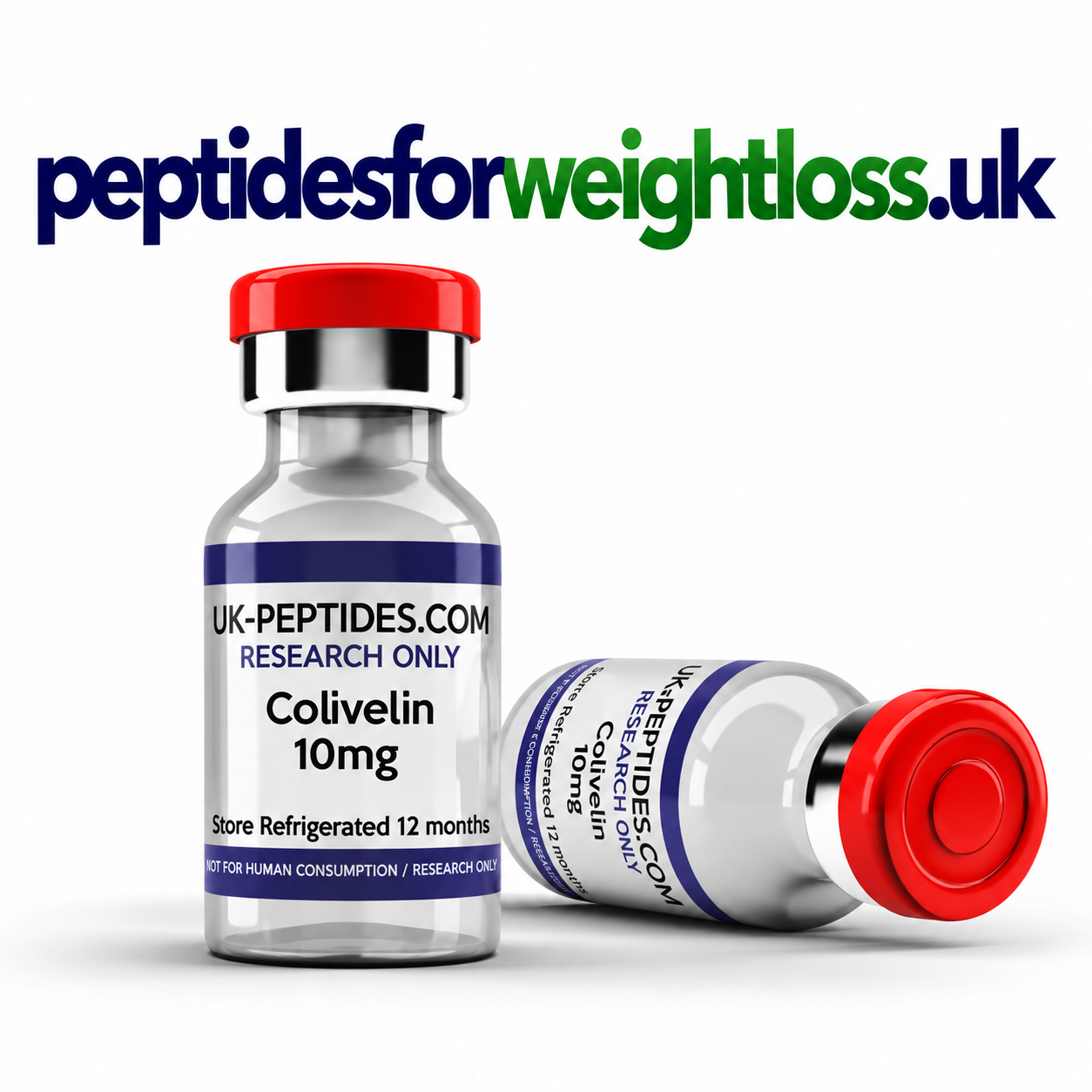
Colivelin 10mg – Humanin and ADNF Hybrid Research Peptide
Colivelin 10mg is a synthetic 26-amino-acid research peptide investigated in scientific studies involving neuronal survival, cellular stress responses, amyloid-beta toxicity and neuroprotective signalling pathways. Developed as a hybrid of activity-dependent neurotrophic factor (ADNF-9) and a modified Humanin peptide fragment, Colivelin has attracted research interest because of its activity in experimental models of neuronal injury.
The peptide combines two biologically investigated sequences into a single molecule. Its N-terminal region corresponds to the nine-amino-acid ADNF fragment, while its C-terminal region contains a modified 17-amino-acid Humanin-derived sequence.
Early studies reported protective effects against selected forms of experimentally induced neuronal cell death. Researchers have also investigated Colivelin in animal models associated with Alzheimer’s disease, amyotrophic lateral sclerosis and cerebral ischemia.
These findings are primarily preclinical. Colivelin has not been established as a safe or effective treatment for neurological disorders in humans.
Colivelin 10mg is therefore relevant to laboratory research involving peptide biochemistry, neuronal signalling, cellular survival mechanisms and experimental neurodegeneration.
What Is Colivelin Peptide?
Colivelin is a synthetic hybrid peptide containing 26 amino acid residues.
It was developed by combining the ADNF-9 sequence with AGA-(C8R)HNG17, a modified Humanin-derived peptide.
Humanin is a naturally occurring peptide associated with cellular stress responses and neuronal survival research.
ADNF-9 is a short peptide fragment associated with activity-dependent neurotrophic factor research.
By combining these components, researchers developed Colivelin to investigate whether a hybrid molecule could influence multiple cellular survival pathways.
Published experiments reported activity involving STAT3 and calcium/calmodulin-dependent protein kinase IV signalling.
Colivelin 10mg Product Specifications
- Product Name: Colivelin 10mg
- Alternative Names: Colivelin peptide, CL peptide, ADNF-Humanin hybrid peptide
- Peptide Classification: Synthetic hybrid neuroprotective research peptide
- Peptide Length: 26 amino acid residues
- Reference Sequence: Ser-Ala-Leu-Leu-Arg-Ser-Ile-Pro-Ala-Pro-Ala-Gly-Ala-Ser-Arg-Leu-Leu-Leu-Leu-Thr-Gly-Glu-Ile-Asp-Leu-Pro
- One-Letter Sequence: SALLRSIPAPAGASRLLLLTGEIDLP
- N-Terminal Component: ADNF-9 sequence
- C-Terminal Component: Modified Humanin-derived 17-residue sequence
- Reference Molecular Formula: C119H206N32O35
- Approximate Molecular Weight: 2,645.1 g/mol
- Reference CAS Number: 867021-83-8
- Labelled Quantity: 10mg
- Research Category: Neuroscience and peptide biochemistry
- Research Focus: Neuronal survival, STAT3 signalling and experimental neurodegeneration
- Purity: Requires batch-specific verification
- Salt Form: Confirm with manufacturer
- Physical Form: Confirm with manufacturer
- Storage: Follow verified manufacturer instructions
- Intended Use: Laboratory research only
The molecular formula and molecular weight refer to the commonly described free peptide. The supplied commercial material may contain counterions, water or other formulation components that affect analytical measurements.
Understanding the Molecular Structure of Colivelin
Colivelin contains 26 amino acid residues joined through peptide bonds.
The reference sequence is:
SALLRSIPAPAGASRLLLLTGEIDLP
The first nine residues correspond to ADNF-9:
SALLRSIPA
The remaining 17 residues correspond to the modified Humanin-derived fragment:
PAGASRLLLLTGEIDLP
This molecular design combines two peptide sequences previously investigated for cellular survival-related activity.
The hybrid structure is important because its experimental properties cannot be assumed identical to those of native Humanin or ADNF-9 alone.
Researchers should confirm the complete 26-residue sequence using appropriate analytical testing.
How Does Colivelin Work?
Colivelin has been investigated in relation to cellular signalling pathways associated with neuronal survival.
Early laboratory studies identified two important signalling mechanisms.
The Humanin-derived portion was associated with signal transducer and activator of transcription 3, commonly abbreviated STAT3.
The ADNF-derived portion was associated with calcium/calmodulin-dependent protein kinase IV, commonly abbreviated CaMKIV.
Experimental research suggested that these pathways contributed to Colivelin-associated protection against selected neuronal stressors.
However, these observations were obtained under defined laboratory conditions.
They do not establish that Colivelin prevents neurodegenerative disease or restores neurological function in humans.
Scientific Research Into Colivelin
1. Neuronal Survival Research
Neurons are specialised cells responsible for transmitting information throughout the nervous system.
Neuronal survival depends on complex signalling networks that regulate metabolism, stress responses and programmed cell death.
Colivelin has been investigated in laboratory models involving experimentally induced neuronal injury.
Early studies reported protective activity against selected cellular stressors associated with neurodegenerative disease research.
These findings support further investigation into the peptide’s molecular biology.
However, improved cell survival in laboratory experiments does not establish clinical neuroprotection in humans.
2. Amyloid-Beta Research
Amyloid-beta is a peptide associated with the pathology of Alzheimer’s disease.
Researchers use amyloid-beta exposure in experimental models to investigate selected mechanisms of neuronal toxicity.
Colivelin was developed partly to examine protective responses against amyloid-beta-associated cellular injury.
In early laboratory experiments, the peptide demonstrated activity against selected amyloid-beta-induced toxic effects.
These observations were made under controlled experimental conditions and cannot be interpreted as proof that Colivelin prevents or treats Alzheimer’s disease.
3. STAT3 Signalling Research
STAT3 is a transcription factor involved in cellular responses to cytokines, growth factors and other signals.
Its activity influences multiple biological processes, including cellular survival and inflammatory regulation.
Colivelin research has identified STAT3-associated signalling as one component of its experimental neuroprotective activity.
The Humanin-derived region of Colivelin is particularly relevant to this pathway.
However, STAT3 activity is highly context-dependent and can have different effects across tissues and disease models.
Activation of STAT3 should not automatically be interpreted as beneficial.
4. CaMKIV Signalling Research
Calcium/calmodulin-dependent protein kinase IV is involved in intracellular signalling and regulation of selected transcriptional processes.
It is relevant to neuroscience because calcium signalling participates in neuronal communication and cellular adaptation.
Research involving Colivelin identified CaMKIV-associated signalling linked to the ADNF-derived component.
Investigators proposed that this pathway contributed to the peptide’s experimental effects on neuronal survival.
These findings remain mechanistic observations rather than evidence of clinical treatment effectiveness.
5. Alzheimer’s Disease Model Research
Alzheimer’s disease is a progressive neurodegenerative disorder involving complex pathological processes.
Experimental models frequently examine amyloid-beta toxicity, synaptic dysfunction and neuronal survival.
Colivelin has been investigated in laboratory and animal models relevant to selected Alzheimer’s disease mechanisms.
Some studies reported improvements in experimental measures of neuronal survival and memory-related performance.
However, animal models do not reproduce the full complexity of human Alzheimer’s disease.
There is insufficient reliable clinical evidence establishing Colivelin as a treatment for Alzheimer’s disease.
6. Amyotrophic Lateral Sclerosis Research
Amyotrophic lateral sclerosis, commonly called ALS, is a neurodegenerative disease involving progressive loss of motor neurons.
Some experimental ALS models use genetic alterations associated with motor neuron injury.
Humanin derivatives and Colivelin have been investigated in preclinical models relevant to motor neuron survival.
Selected animal studies reported changes in motor performance or survival-related outcomes.
However, these results do not establish that Colivelin slows ALS progression or improves clinical outcomes in humans.
7. Cerebral Ischemia Research
Cerebral ischemia occurs when blood flow to brain tissue is reduced, potentially resulting in neuronal injury.
Experimental ischemia models are used to investigate oxidative stress, inflammation, cellular death and tissue recovery.
A 2019 study examined Colivelin in an experimental model of ischemic brain injury.
The researchers reported changes in neuronal injury, axonal damage and signalling pathways associated with cellular survival.
These findings are preclinical and do not establish Colivelin as a treatment for stroke.
8. Apoptosis Research
Apoptosis is a regulated form of programmed cell death involved in tissue development and cellular maintenance.
Changes in apoptotic signalling can contribute to neuronal injury under certain experimental conditions.
Colivelin has been investigated in relation to pathways that influence cellular survival and death.
Some studies reported changes in markers associated with apoptosis following exposure to the peptide.
However, suppression of apoptosis is not universally beneficial, and its consequences depend on the biological context.
The clinical significance of these experimental observations remains unestablished.
9. Peptide Structure-Activity Research
Structure-activity relationship research examines how molecular features influence chemical and biological properties.
Colivelin is an example of a synthetic hybrid peptide created by combining two previously investigated peptide regions.
Its 26-residue sequence provides a model for investigating how peptide fusion affects molecular conformation and experimental activity.
Published structural research reported that Colivelin’s secondary structure resembled ADNF-9 more closely than native Humanin.
These findings demonstrate why the biological properties of a hybrid peptide must be investigated directly rather than predicted solely from its components.
10. Neuroinflammation Research
Neuroinflammation involves immune-related signalling within the nervous system.
It can involve microglia, astrocytes, cytokines and other molecular mediators.
Because Colivelin has been investigated in neuronal injury models involving multiple stress-response pathways, it is relevant to broader studies of neuroinflammatory signalling.
However, its direct effects on specific inflammatory pathways depend on the experimental model.
There is insufficient clinical evidence that Colivelin prevents or treats inflammatory neurological disorders.
Colivelin vs Humanin
Colivelin and Humanin are related but chemically distinct peptides.
- Colivelin: A synthetic 26-amino-acid hybrid containing ADNF-9 and a modified Humanin-derived fragment.
- Humanin: A naturally occurring peptide commonly described as containing 24 amino acid residues.
- Structural Difference: Colivelin includes an ADNF-derived sequence and multiple modifications to the Humanin-derived region.
- Research Focus: Both have been investigated in neuronal survival and cellular stress research.
- Clinical Evidence: Neither should be assumed to have proven therapeutic effectiveness based on laboratory activity alone.
Research findings involving Humanin cannot automatically be applied to Colivelin.
Colivelin vs ADNF-9
ADNF-9 is a nine-amino-acid peptide fragment with the sequence SALLRSIPA.
Colivelin contains this sequence at its N-terminus and includes an additional modified Humanin-derived region.
The two compounds therefore differ in molecular size, sequence and experimental properties.
Research involving Colivelin has investigated signalling associated with both the ADNF and Humanin components.
However, these findings do not establish equivalent biological activity in every experimental system.
Colivelin vs Humanin Analogues
Humanin research includes several synthetic analogues developed to investigate structure-dependent biological activity.
Examples include S14G-Humanin and modified Humanin-derived fragments.
Colivelin incorporates a modified Humanin sequence into a larger hybrid molecule.
This distinguishes it from shorter Humanin analogues.
Researchers should verify the complete sequence when comparing experimental findings across different peptides.
Colivelin and Cognitive Function Research
Colivelin has been investigated in animal models involving memory-related outcomes.
Some preclinical studies reported changes in experimental memory performance under specific conditions.
However, these findings do not establish that Colivelin improves learning, memory, attention or cognitive performance in humans.
It should not be described as a clinically proven nootropic or cognitive enhancement treatment.
Colivelin and Neurodegenerative Disease Research
Neurodegenerative diseases involve complex biological changes that may include protein aggregation, mitochondrial dysfunction, inflammation and neuronal death.
Colivelin has been investigated in selected experimental models associated with these processes.
Its reported activity in laboratory and animal studies has contributed to research into peptide-based neuronal survival mechanisms.
However, there is no established clinical evidence that Colivelin prevents, reverses or treats human neurodegenerative disease.
Colivelin and Weight Management
Colivelin is not an established weight-loss peptide.
Its primary research associations involve neuronal survival, cellular stress responses and neuroprotective signalling.
There is insufficient reliable clinical evidence that Colivelin reduces body fat, suppresses appetite or treats obesity.
It should not be marketed as a proven fat-burning or metabolic weight-management compound.
Understanding the Colivelin 10mg Label
The 10mg designation refers to the labelled quantity of research material.
It does not represent a recommended human dose or independently establish the actual peptide content, purity or biological activity.
Researchers should verify whether the stated mass refers to the free peptide or includes counterions and other formulation components.
Batch-specific analytical documentation is necessary to establish the actual specifications of the supplied material.
Colivelin 10mg Research Quality and Documentation
Important considerations when evaluating Colivelin research material include:
- Verification of the complete 26-amino-acid sequence
- Confirmation of the ADNF-9 component
- Confirmation of the modified Humanin-derived component
- Verification of the expected molecular mass
- Confirmation of peptide stereochemistry
- Distinction from native Humanin and other Humanin analogues
- Identification of the supplied salt form
- Batch-specific certificate of analysis
- Appropriate analytical purity testing
- Mass spectrometry or another suitable identity method
- Confirmation of the labelled 10mg quantity
- Assessment of synthesis-related impurities
- Manufacturer and batch traceability
- Documentation of counterions and formulation components
- Verified packaging specifications
- Product-specific storage and stability information
- Clearly stated research-use classification
These records help distinguish accurately characterised Colivelin from products identified only by commercial naming conventions.
Storage and Handling of Colivelin
Colivelin research material should be stored according to verified manufacturer instructions.
Storage requirements depend on the peptide’s salt form, physical presentation, formulation and packaging.
Researchers should not assume that all Colivelin products have identical stability or shelf-life characteristics.
Laboratory handling should follow relevant safety documentation and institutional procedures.
Colivelin Safety and Scientific Limitations
Colivelin is an investigational peptide without an established human clinical safety profile.
Most published research involves laboratory experiments and animal models.
Potential concerns include peptide-related impurities, immunogenicity, formulation-dependent reactions, unintended effects on cellular signalling and unknown long-term consequences.
Colivelin is not an established approved medicine for Alzheimer’s disease, ALS, stroke, cognitive impairment or weight management.
Research-grade material should not be assumed suitable for human administration.
This information is intended for scientific and educational purposes only and does not provide medical advice, human dosing recommendations or administration instructions.
Frequently Asked Questions About Colivelin 10mg
What is Colivelin 10mg?
Colivelin 10mg is a product listing for a synthetic 26-amino-acid hybrid research peptide with a labelled quantity of 10mg.
What is the Colivelin peptide sequence?
The reference sequence is SALLRSIPAPAGASRLLLLTGEIDLP.
How many amino acids are in Colivelin?
Colivelin contains 26 amino acid residues.
What is the molecular weight of Colivelin?
The reference free peptide has an approximate molecular weight of 2,645.1 g/mol.
What is the molecular formula of Colivelin?
The reference molecular formula is C119H206N32O35.
What is the CAS number for Colivelin?
The reference CAS number is 867021-83-8.
Is Colivelin the same as Humanin?
No. Colivelin is a hybrid peptide containing ADNF-9 and a modified Humanin-derived fragment.
What is Colivelin researched for?
Colivelin has been investigated in neuronal survival, amyloid-beta toxicity, STAT3 signalling and experimental neurological disease models.
Does Colivelin improve memory?
Some animal studies reported changes in memory-related outcomes, but human cognitive benefits have not been established.
Can Colivelin treat Alzheimer’s disease?
No clinical evidence establishes Colivelin as an effective treatment for Alzheimer’s disease.
Can Colivelin treat stroke?
Preclinical ischemia research has reported experimental findings, but Colivelin is not an established stroke treatment.
Is Colivelin a weight-loss peptide?
No. Colivelin is not an established treatment for obesity or weight management.
What does the 10mg designation mean?
It refers to the labelled quantity of research material, not a recommended human dose.
Colivelin 10mg – Product Summary
Colivelin 10mg is a synthetic 26-amino-acid hybrid peptide combining an ADNF-derived fragment with a modified Humanin-derived sequence.
Its molecular design has made it a subject of interest in laboratory and animal research involving neuronal survival, amyloid-beta toxicity and cellular signalling.
Although selected preclinical studies reported neuroprotective activity, clinical effectiveness and long-term safety in humans remain unestablished.
Researchers should verify the complete peptide sequence, molecular identity, purity, salt form, labelled quantity and batch-specific documentation before selecting Colivelin 10mg for laboratory investigation.
Reviews
There are no reviews yet.