
Description
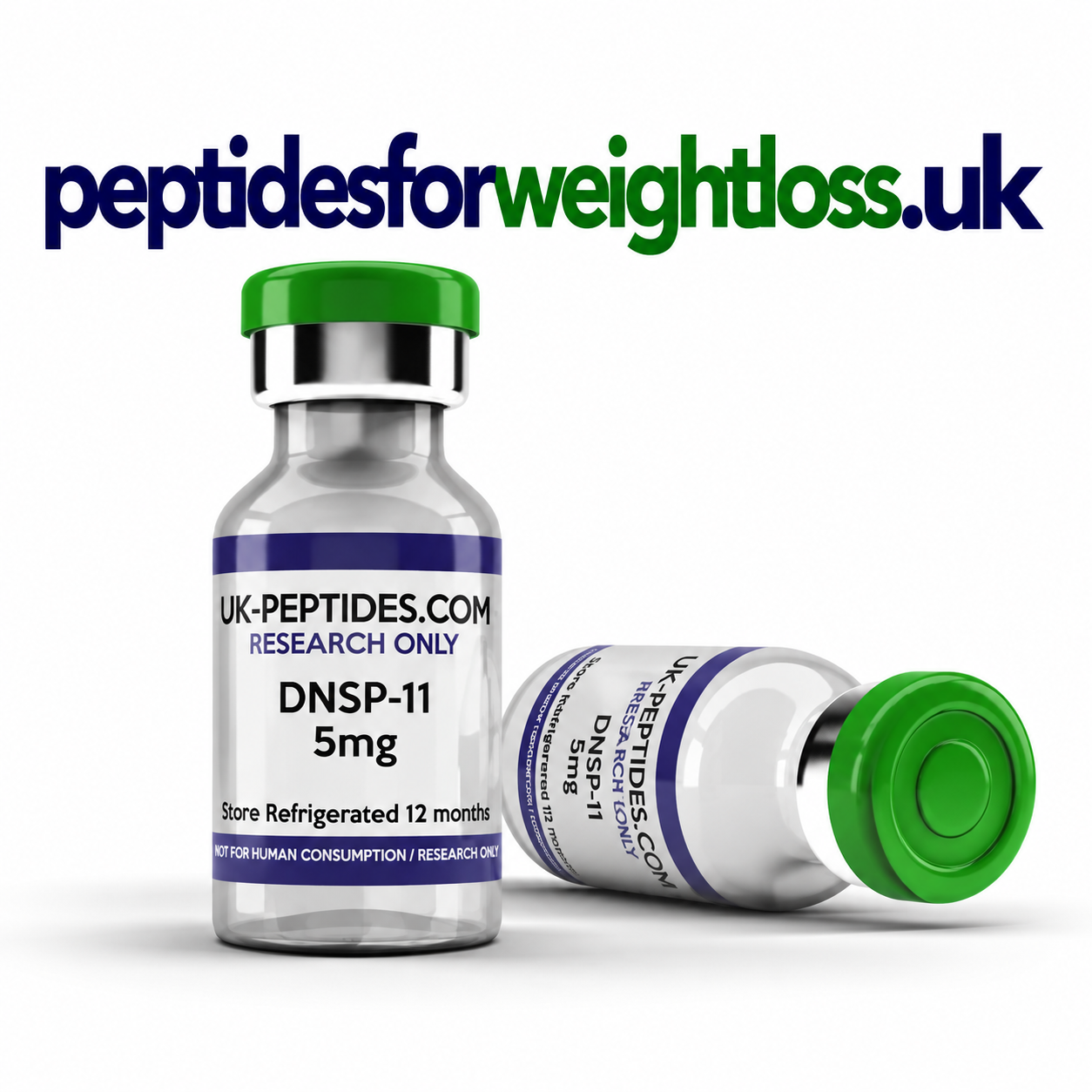
DNSP-11 5mg – Dopamine Neuron Stimulating Research Peptide
DNSP-11 5mg is a synthetic research peptide investigated in experimental neuroscience, dopamine neuron biology, neurotrophic signalling and Parkinson’s disease-related laboratory models. DNSP-11 stands for dopamine neuron stimulating peptide-11, an 11-amino-acid sequence identified within the precursor region of glial cell line-derived neurotrophic factor (GDNF).
DNSP-11 5mg is associated with scientific investigations into neuronal survival, neurite development, dopamine metabolism and cellular responses to neurotoxic stress. Its relatively short amino acid sequence distinguishes it from the larger mature GDNF protein.
Published laboratory studies have reported that DNSP-11 can support the survival of selected dopamine-producing neurons and influence cellular pathways involved in experimental neuronal injury. Animal studies have also examined dopamine-related outcomes in models of Parkinson’s disease.
However, DNSP-11 5mg is an investigational research material. These preclinical findings do not establish that DNSP-11 prevents, reverses or treats Parkinson’s disease or any other neurological condition in humans.
What Is DNSP-11 5mg?
DNSP-11 5mg refers to a research product labelled as containing 5mg of dopamine neuron stimulating peptide-11.
DNSP-11 is a short peptide containing eleven amino acid residues. It was identified through investigation of the propeptide region of the human GDNF precursor.
GDNF is a neurotrophic protein involved in research concerning the survival and function of selected neuronal populations.
Researchers proposed that processing of the GDNF precursor could generate smaller peptide fragments with independent biological activity.
DNSP-11 was one of the fragments investigated under this hypothesis.
The original experimental research used a synthetic peptide containing the sequence PPEAPAEDRSL with a C-terminal amide.
Importantly, the proposed generation of DNSP-11 from the GDNF precursor does not mean that its physiological production and functions in humans have been fully established.
DNSP-11 5mg Product Specifications
- Product Name: DNSP-11 5mg
- Full Name: Dopamine Neuron Stimulating Peptide-11
- Alternative Name: DNSP11
- Peptide Classification: Synthetic neurotrophic research peptide
- Reference Sequence: Pro-Pro-Glu-Ala-Pro-Ala-Glu-Asp-Arg-Ser-Leu-NH2
- One-Letter Sequence: PPEAPAEDRSL-NH2
- Peptide Length: 11 amino acid residues
- Reference Molecular Weight: Approximately 1,180.3 g/mol
- Terminal Modification: C-terminal amidation
- Sequence Origin: Predicted GDNF precursor processing region
- Labelled Quantity: 5mg
- Research Category: Neuroscience and peptide biochemistry
- Research Focus: Dopamine neuron survival, neuronal signalling and neurotoxic stress
- Purity: Requires batch-specific verification
- Salt Form: Confirm with manufacturer
- Physical Form: Confirm with manufacturer
- Storage: Follow verified manufacturer instructions
- Intended Use: Laboratory research only
The reference specifications describe the amidated DNSP-11 sequence used in published research. They do not independently verify the molecular identity, purity or composition of a particular commercial batch of DNSP-11 5mg.
Understanding the Molecular Structure of DNSP-11
DNSP-11 contains eleven amino acid residues connected through peptide bonds.
The reference amino acid sequence is:
PPEAPAEDRSL-NH2
The peptide contains proline, glutamic acid, alanine, aspartic acid, arginine, serine and leucine residues.
Its C-terminal amide is an important part of the research structure.
Researchers should distinguish the amidated peptide from an otherwise similar sequence containing a free carboxyl terminus.
These molecular forms are not chemically identical and may exhibit different experimental properties.
DNSP-11 5mg research material should therefore be characterised using methods capable of confirming both the amino acid sequence and the terminal modification.
How Does DNSP-11 Work?
DNSP-11 has been investigated for neurotrophic-like activity in selected experimental systems.
Neurotrophic factors are molecules associated with neuronal development, survival and functional regulation.
The original DNSP-11 studies reported changes in dopamine neuron survival, neurite development and responses to experimentally induced cellular stress.
Researchers also observed effects on selected markers of apoptosis and mitochondrial-associated cell death.
Although DNSP-11 originates from a sequence within the GDNF precursor, it should not be assumed to operate through the same receptors as mature GDNF.
Early findings suggested that DNSP-11 activity did not directly depend on the classical GFRalpha1 receptor pathway.
Later research also examined extracellular signal-regulated kinase signalling, commonly described as ERK1/2.
However, the complete molecular mechanism and specific receptor interactions of DNSP-11 remain incompletely established.
Scientific Research Into DNSP-11 5mg
1. DNSP-11 5mg and Dopamine Neuron Survival Research
Dopamine neurons are specialised nerve cells involved in movement, motivation and other neurological functions.
Some dopamine-producing neurons are particularly vulnerable to injury in experimental neurodegenerative disease models.
DNSP-11 was investigated in primary neuronal cultures to examine whether the peptide could influence dopamine neuron survival.
A 2010 study reported increased survival of fetal mesencephalic neurons exposed to DNSP-11 under laboratory conditions.
The investigators also observed changes in neurite development.
These results support further investigation into dopamine neuron biology.
However, improved survival in cultured cells does not establish that DNSP-11 5mg protects neurons in humans.
2. DNSP-11 and Neurite Outgrowth Research
Neurites are cellular projections that develop from neurons and contribute to communication within the nervous system.
Neurite development is an important experimental measure in studies of neuronal differentiation.
Research involving DNSP-11 has reported increased neuritic outgrowth in selected neuronal cultures.
These findings suggest that the peptide can influence aspects of neuronal morphology under specific experimental conditions.
However, neurite growth in a laboratory culture is not equivalent to functional nerve regeneration in humans.
3. DNSP-11 5mg and Parkinson’s Disease Research
Parkinson’s disease is a progressive neurological condition associated with degeneration of dopamine-producing neurons in the substantia nigra.
Researchers use experimental Parkinson’s disease models to investigate dopamine signalling, neuronal injury and motor-related behaviour.
DNSP-11 has been examined in rodent models involving chemically induced dopamine neuron damage.
The original 2010 research reported changes in dopamine-related tissue measurements and selected movement-related outcomes.
These observations contributed to interest in the peptide as an experimental neurotrophic molecule.
However, DNSP-11 5mg is not an established treatment for Parkinson’s disease.
There is insufficient human clinical evidence demonstrating that DNSP-11 slows disease progression, restores dopamine neurons or improves patient outcomes.
4. Dopamine Metabolism Research
Dopamine is a neurotransmitter involved in communication between specialised neurons.
Its production, storage, release and metabolism are regulated by multiple cellular processes.
Early animal research involving DNSP-11 reported changes in dopamine and dopamine metabolite concentrations in selected brain regions.
These observations are relevant to the study of dopamine neuron function.
However, tissue dopamine measurements do not independently establish clinical improvements in movement or neurological health.
Later studies also produced mixed results across different dopamine-release measurements.
5. DNSP-11 and Oxidative Stress Research
Oxidative stress occurs when reactive chemical species overwhelm cellular protective mechanisms.
It is one of several processes investigated in experimental neuronal injury.
Researchers have examined DNSP-11 in cell models exposed to neurotoxic compounds.
The original study reported protection against selected forms of chemically induced dopaminergic cell death.
These findings suggest possible interactions with cellular stress-response pathways.
However, direct antioxidant activity and clinical neuroprotection should not be assumed from these results.
6. DNSP-11 5mg and 6-Hydroxydopamine Research
6-Hydroxydopamine, abbreviated 6-OHDA, is a neurotoxic compound used in experimental models of dopamine neuron injury.
It is frequently used to investigate mechanisms associated with dopaminergic degeneration.
In a 2010 laboratory study, DNSP-11 reduced selected markers of 6-OHDA-associated cell death in MN9D cells.
These included changes in TUNEL-positive cells and caspase-3 activity.
The findings support investigation of DNSP-11 in defined neurotoxicity models.
They do not establish that DNSP-11 prevents or treats neurodegeneration in humans.
7. Apoptosis and Caspase-3 Research
Apoptosis is a regulated form of programmed cell death.
Caspase-3 is an enzyme involved in several apoptotic pathways.
Researchers have investigated how DNSP-11 affects selected indicators of apoptosis in neuronal cell models.
The original study reported reduced caspase-3 activity following exposure to DNSP-11 under specific experimental conditions.
These observations are relevant to research into neuronal survival mechanisms.
However, inhibition of cell death pathways is not universally beneficial and does not establish clinical safety.
8. Mitochondrial Research
Mitochondria are cellular structures involved in energy production and several signalling processes.
They also participate in pathways associated with programmed cell death.
DNSP-11 has been investigated in experimental systems involving mitochondrial-associated cellular injury.
The 2010 study reported that the peptide reduced cytochrome c release in a selected neuronal cell model.
Cytochrome c release is relevant to certain apoptotic pathways.
However, these findings do not demonstrate improved mitochondrial function in humans.
9. ERK1/2 Signalling Research
Extracellular signal-regulated kinases ERK1 and ERK2 participate in intracellular signalling networks.
These pathways can influence cellular differentiation, survival and responses to environmental signals.
A 2014 study investigated dopamine neuron function after DNSP-11 exposure and examined ERK1/2 phosphorylation in laboratory experiments.
The findings contributed to research into possible signalling mechanisms associated with DNSP-11.
However, ERK1/2 phosphorylation is not proof of a specific therapeutic mechanism.
10. DNSP-11 5mg and Dopamine Release Research
Dopamine release is a dynamic process influenced by neuronal activity and cellular regulation.
Researchers have examined dopamine release following DNSP-11 exposure in animal models.
A 2014 study used different analytical methods to assess dopamine release at selected time points.
The investigators did not find significant changes using one microdialysis assessment performed four weeks after treatment.
Other measurements detected changes in particular striatal regions at earlier time points.
These mixed findings demonstrate why experimental outcomes should be described precisely rather than summarised as universal increases in dopamine.
11. GDNF Precursor Peptide Research
GDNF is produced initially as a larger precursor protein.
Proteolytic processing generates the mature neurotrophic factor.
Researchers proposed that smaller fragments within the precursor region might also have biological activity.
DNSP-11 is one such predicted fragment.
The peptide’s research history is important because it challenges the assumption that precursor sequences function only as inactive structural regions.
However, the physiological generation and full biological role of DNSP-11 in humans have not been conclusively established.
12. Peptide Structure-Activity Research
Structure-activity relationship research examines how chemical features influence molecular behaviour.
DNSP-11 contains eleven amino acids and a C-terminal amide.
These features can be investigated through analytical chemistry and comparative peptide studies.
Researchers have also examined related peptides, including DNSP-5 and DNSP-17.
However, these compounds differ in sequence, molecular size and experimental activity.
Results involving DNSP-5 or DNSP-17 should not automatically be attributed to DNSP-11.
DNSP-11 5mg vs GDNF
DNSP-11 and mature GDNF are chemically different molecules.
- DNSP-11: An eleven-amino-acid amidated peptide derived from a predicted GDNF precursor sequence.
- GDNF: A substantially larger neurotrophic protein with established roles in experimental neuronal biology.
- Molecular Structure: DNSP-11 is a short linear peptide, while mature GDNF has a complex protein structure.
- Signalling: DNSP-11 does not appear to reproduce all classical GDNF receptor interactions.
- Evidence: Findings involving mature GDNF cannot automatically establish the effects of DNSP-11.
DNSP-11 5mg should therefore be identified and evaluated as a distinct research material.
DNSP-11 vs DNSP-5
DNSP-5 is a shorter peptide associated with research into predicted GDNF precursor fragments.
DNSP-11 contains eleven amino acids, while DNSP-5 contains five.
Both peptides have been investigated in experimental neuroscience.
However, their chemical identities and biological properties differ.
Researchers should avoid treating the two compounds as interchangeable.
DNSP-11 vs DNSP-17
DNSP-17 is another peptide investigated in relation to GDNF-associated sequences.
DNSP-17 contains seventeen amino acid residues, compared with eleven in DNSP-11.
Differences in amino acid sequence can affect peptide structure, stability and experimental activity.
Findings involving DNSP-17 should not be assumed to apply to DNSP-11.
DNSP-11 5mg and Neuroprotection Research
Neuroprotection refers to biological processes that may reduce neuronal injury under specific conditions.
DNSP-11 has demonstrated neurotrophic-like activity in selected laboratory and animal studies.
These findings include changes in neuronal survival, neurite outgrowth and markers associated with experimentally induced cell death.
However, there is insufficient clinical evidence that DNSP-11 5mg prevents neurological disease or provides meaningful neuroprotection in humans.
DNSP-11 5mg and Cognitive Function
DNSP-11 is sometimes discussed in connection with brain health because of its association with dopamine neuron research.
However, dopamine signalling participates in many complex neurological processes.
Experimental changes in dopamine-related measurements do not establish improved memory, attention, learning or cognitive performance.
There is insufficient reliable human evidence that DNSP-11 5mg functions as a cognitive enhancer.
DNSP-11 5mg and Weight Management
DNSP-11 5mg is not an established weight-loss peptide.
Its principal research associations involve dopamine neurons, neurotrophic signalling and experimental neuronal injury.
There is insufficient clinical evidence that DNSP-11 reduces body fat, suppresses appetite or treats obesity.
It should not be described as a proven fat-burning or metabolic weight-management compound.
Understanding the DNSP-11 5mg Label
The 5mg designation refers to the labelled quantity of research material.
It does not represent a recommended human dose or independently establish the peptide’s purity, sterility or biological activity.
Researchers should verify whether the stated mass refers to the amidated peptide or includes counterions and other formulation components.
Batch-specific analytical documentation is necessary to establish the actual characteristics of the supplied material.
DNSP-11 5mg Research Quality and Documentation
Important considerations when evaluating DNSP-11 5mg research material include:
- Verification of the complete eleven-amino-acid sequence
- Confirmation of the C-terminal amide
- Verification of the expected molecular mass
- Confirmation of peptide stereochemistry
- Distinction from DNSP-5 and DNSP-17
- Identification of the supplied salt form
- Batch-specific certificate of analysis
- Appropriate analytical purity testing
- Mass spectrometry or another suitable identity method
- Confirmation of the labelled 5mg quantity
- Assessment of synthesis-related impurities
- Manufacturer and batch traceability
- Documentation of counterions and formulation components
- Verified packaging specifications
- Product-specific storage and stability information
- Clearly stated research-use classification
These records help distinguish accurately characterised DNSP-11 5mg from products identified only by commercial naming conventions.
Storage and Handling of DNSP-11 5mg
DNSP-11 5mg research material should be stored according to verified manufacturer instructions.
Storage requirements depend on the peptide’s salt form, physical presentation, formulation and packaging.
Researchers should not assume that all DNSP-11 products have identical stability or shelf-life characteristics.
Laboratory handling should follow relevant safety documentation and institutional procedures.
DNSP-11 5mg Safety and Scientific Limitations
DNSP-11 5mg is an investigational research material without an established human clinical safety profile.
Published research is predominantly preclinical and involves laboratory experiments and animal models.
Potential concerns include peptide-related impurities, formulation-dependent reactions, immunogenicity and unknown long-term biological effects.
DNSP-11 is not an established approved medicine for Parkinson’s disease, cognitive impairment, neuronal injury or weight management.
Research-grade material should not be assumed suitable for human administration.
This information is intended for scientific and educational purposes only and does not provide medical advice, human dosing recommendations or administration instructions.
Frequently Asked Questions About DNSP-11 5mg
What is DNSP-11 5mg?
DNSP-11 5mg is a product listing for dopamine neuron stimulating peptide-11 with a labelled quantity of 5mg.
What does DNSP-11 stand for?
DNSP-11 stands for dopamine neuron stimulating peptide-11.
What is the DNSP-11 peptide sequence?
The reference sequence is PPEAPAEDRSL-NH2.
How many amino acids does DNSP-11 contain?
DNSP-11 contains eleven amino acid residues.
What is the molecular weight of DNSP-11?
The reference amidated peptide has a molecular weight of approximately 1,180.3 g/mol.
Is DNSP-11 the same as GDNF?
No. DNSP-11 is a short peptide associated with a predicted precursor sequence, while mature GDNF is a much larger protein.
What is DNSP-11 researched for?
DNSP-11 has been investigated in dopamine neuron survival, neurite outgrowth, neurotoxic stress and experimental Parkinson’s disease models.
Does DNSP-11 increase dopamine?
Some animal studies reported changes in dopamine-related measurements, but findings vary by experimental method and conditions.
Can DNSP-11 treat Parkinson’s disease?
No reliable clinical evidence establishes DNSP-11 as an effective treatment for Parkinson’s disease.
Does DNSP-11 improve memory?
There is insufficient human clinical evidence that DNSP-11 improves memory or cognitive performance.
Is DNSP-11 a weight-loss peptide?
No. DNSP-11 is not an established treatment for obesity or weight management.
What does DNSP-11 5mg mean?
The designation refers to a labelled quantity of 5mg of research material, not a recommended human dose.
DNSP-11 5mg – Product Summary
DNSP-11 5mg is a synthetic eleven-amino-acid research peptide associated with investigations into dopamine neuron survival, neuronal signalling and experimental neurodegenerative disease models.
The peptide contains the sequence PPEAPAEDRSL-NH2 and originates from a predicted processing region of the GDNF precursor.
Although selected preclinical studies reported neurotrophic-like activity, human therapeutic effectiveness and long-term safety remain unestablished.
Researchers evaluating DNSP-11 5mg should verify the complete peptide sequence, terminal amidation, molecular identity, purity, salt form, labelled quantity and batch-specific documentation.


Reviews
There are no reviews yet.