
Description
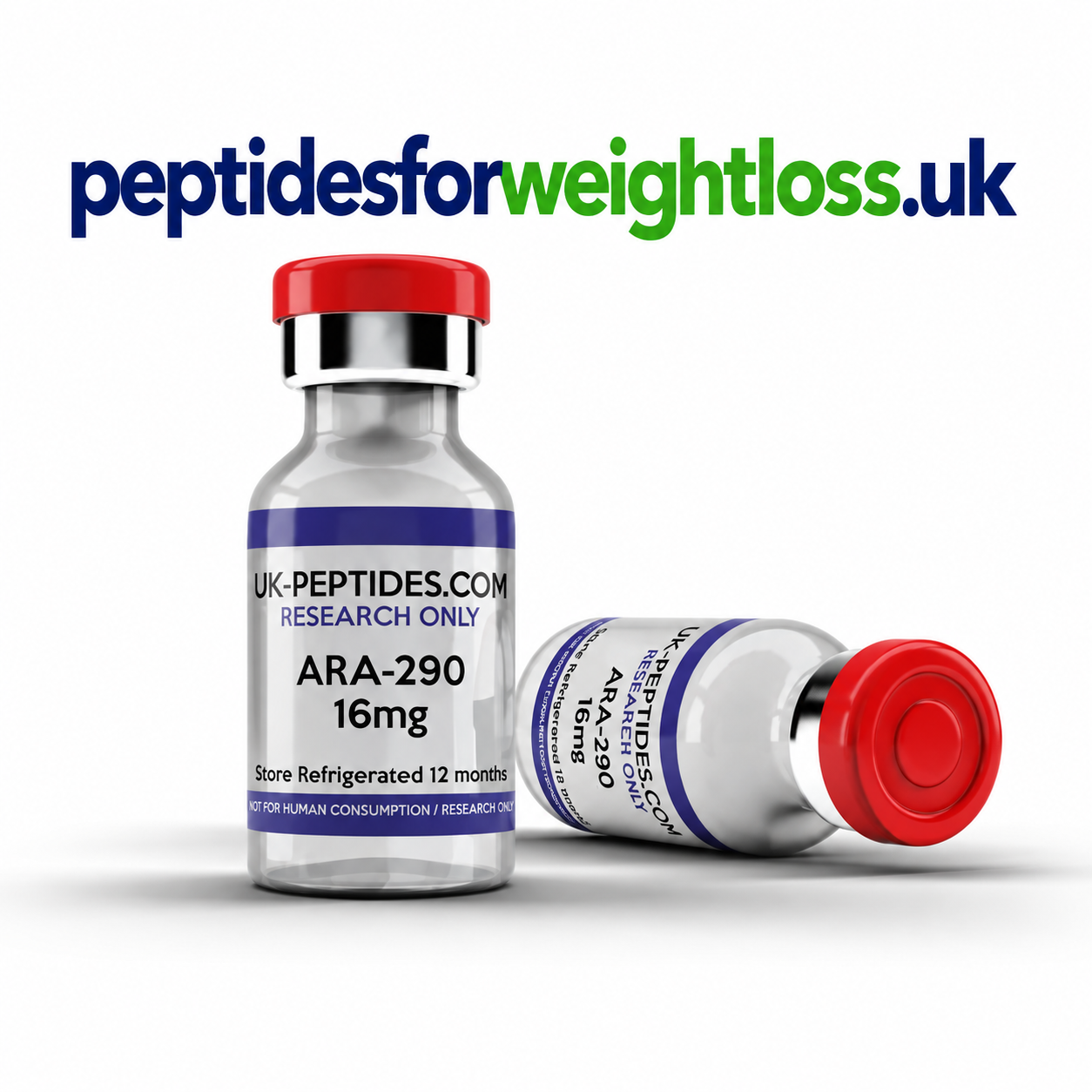
ARA-290 16mg – Cibinetide Research Peptide
ARA-290 16mg is an investigational synthetic peptide associated with scientific research into cellular protection, inflammatory signalling, peripheral nerve biology and the innate repair receptor (IRR). Also known as Cibinetide or pyroglutamate helix B surface peptide (pHBSP), ARA-290 is an 11-amino-acid peptide developed from structural features of erythropoietin (EPO).
ARA-290 has attracted scientific interest because it was designed to investigate tissue-protective signalling pathways without reproducing the conventional red blood cell-stimulating activity of erythropoietin.
Published laboratory, animal and early human clinical studies have examined ARA-290 in relation to small-fibre neuropathy, neuroinflammation, metabolic regulation and tissue injury. Although these investigations have produced findings of scientific interest, they have not established ARA-290 as an approved treatment for human disease.
This ARA-290 16mg product description explains its molecular structure, proposed biological mechanism, scientific research background, clinical evidence, safety limitations and important laboratory quality considerations.
What Is ARA-290 Peptide?
ARA-290 is a synthetic 11-amino-acid peptide developed from the three-dimensional structure of erythropoietin, a naturally occurring glycoprotein hormone involved in red blood cell production.
Unlike the complete erythropoietin protein, ARA-290 represents a much smaller engineered peptide intended to investigate a particular signalling pathway associated with cellular responses to injury.
ARA-290 is also known as Cibinetide and pyroglutamate helix B surface peptide.
Its research history includes investigations into peripheral nerve disorders, inflammatory responses and the biological regulation of tissue protection.
ARA-290 should not be confused with erythropoietin itself, and its experimental findings should not be interpreted as established clinical benefits.
ARA-290 16mg Product Specifications
- Product Name: ARA-290 16mg
- Alternative Name: Cibinetide
- Research Name: Pyroglutamate Helix B Surface Peptide (pHBSP)
- Peptide Classification: Synthetic erythropoietin-derived peptide
- Peptide Length: 11 amino acid residues
- Labelled Quantity: 16mg
- Reference Sequence: pGlu-Glu-Gln-Leu-Glu-Arg-Ala-Leu-Asn-Ser-Ser
- Reference Molecular Formula: C51H84N16O21
- Approximate Molecular Weight: 1,257.3 g/mol
- Research Target: Innate Repair Receptor (IRR)
- Associated Receptor Components: Erythropoietin receptor (EPOR) and beta-common receptor (CD131)
- Research Category: Cellular protection and neuroinflammation research
- Research Applications: Peripheral nerve biology, inflammatory signalling and experimental tissue injury models
- Purity: Requires batch-specific analytical verification
- Physical Form: Confirm with manufacturer
- Storage: Follow verified manufacturer instructions
- Intended Use: Laboratory research
The molecular formula and molecular weight above refer to the commonly documented free-peptide structure of Cibinetide. Product-specific salts, counterions or other modifications may affect analytical specifications.
Understanding the Molecular Structure of ARA-290
ARA-290 was designed using structural information from the helix B region of erythropoietin.
The peptide contains 11 amino acid residues and features an N-terminal pyroglutamate group.
This structural feature distinguishes Cibinetide from certain related erythropoietin-derived peptide sequences.
The molecular structure of ARA-290 is relevant to its investigation as a ligand associated with the innate repair receptor.
Because small structural changes can influence peptide behaviour, researchers should confirm the exact amino acid sequence and molecular form of any supplied ARA-290 material.
How Does ARA-290 Work?
ARA-290 was designed to investigate signalling through the innate repair receptor, a receptor complex associated with cellular responses to injury and inflammation.
The proposed innate repair receptor consists of the erythropoietin receptor and the beta-common receptor, also known as CD131.
This receptor complex differs from the conventional erythropoietin receptor arrangement responsible for stimulating red blood cell production.
Experimental research suggests that ARA-290 can activate pathways associated with cellular protection and inflammatory regulation without the same erythropoietic activity as the complete EPO protein.
However, the precise signalling mechanisms and their clinical significance remain subjects of scientific investigation.
Scientific Research Into ARA-290
1. Small-Fibre Neuropathy Research
Small-fibre neuropathy affects small sensory and autonomic nerve fibres and may be associated with pain, abnormal sensations and autonomic symptoms.
ARA-290 has been investigated in clinical studies involving patients with small-fibre neuropathy associated with sarcoidosis and type 2 diabetes.
Researchers evaluated patient-reported symptoms, nerve-related measurements and other exploratory outcomes.
Some studies reported improvements in selected symptom scores and corneal nerve fibre measurements.
These findings are scientifically relevant but do not establish that ARA-290 reliably repairs peripheral nerves or provides a proven treatment for neuropathy.
2. Neuroinflammation Research
Neuroinflammation refers to inflammatory responses involving cells and signalling pathways within the nervous system.
Experimental studies of ARA-290 have examined how innate repair receptor signalling may influence inflammatory activity following peripheral nerve injury.
Animal investigations have included measurements involving spinal microglia, mechanical sensitivity and other responses associated with nerve damage.
Results from these models suggest that ARA-290 can influence selected inflammatory and sensory outcomes under controlled experimental conditions.
However, animal findings cannot be assumed to predict equivalent effects in humans.
3. Peripheral Nerve Injury Models
Peripheral nerve injury can alter sensory signalling and trigger complex cellular responses.
ARA-290 has been investigated in animal models designed to examine nerve injury-associated hypersensitivity and inflammatory changes.
Some experimental studies reported reductions in selected measures of mechanical or cold sensitivity.
These results contributed to the scientific interest in ARA-290 as an investigational compound associated with nerve injury biology.
They do not demonstrate that a commercially supplied ARA-290 research product restores nerve function in humans.
4. Sarcoidosis-Associated Neuropathy Research
Sarcoidosis is an inflammatory disease that can affect multiple organs and may be associated with small-fibre neuropathy.
Clinical investigations have examined ARA-290 in patients experiencing neuropathic symptoms associated with sarcoidosis.
Researchers evaluated symptom questionnaires and measurements of small nerve fibres, including corneal nerve fibre density.
Selected studies reported encouraging exploratory findings.
However, the available clinical evidence remains insufficient to establish ARA-290 as an approved treatment for sarcoidosis or its neurological complications.
5. Type 2 Diabetes and Metabolic Research
ARA-290 has also been studied in patients with type 2 diabetes and neuropathic symptoms.
A published phase 2 investigation examined measures including glycated haemoglobin, lipid profiles, neuropathic symptoms and corneal nerve fibre characteristics.
The study reported improvements in some metabolic and neurological measurements during its observation period.
These results were exploratory and require confirmation through larger, longer-duration clinical trials.
ARA-290 is not an established diabetes treatment or a clinically validated medicine for blood glucose control.
6. Cellular Protection and Tissue Injury Research
Experimental investigations have explored ARA-290 in various models of tissue injury.
Research questions have included the relationship between inflammatory signalling, cellular survival and the biological response to damaged tissue.
Preclinical studies involving erythropoietin-derived peptides have examined tissues such as peripheral nerves, the heart and other organs.
These findings support further investigation of innate repair receptor biology.
However, they do not establish that ARA-290 repairs organs, accelerates healing or prevents tissue damage in humans.
7. Inflammatory Signalling Pathways
Inflammation involves coordinated interactions between immune cells, signalling molecules and tissue-specific responses.
ARA-290 research has investigated whether innate repair receptor activation can influence selected inflammatory pathways.
Experimental findings suggest that the peptide may affect biological responses associated with inflammation and injury.
Further research is required to determine the reproducibility, selectivity and clinical significance of these observations.
ARA-290 vs Erythropoietin: What Is the Difference?
ARA-290 and erythropoietin are related through their structural research background, but they are not the same molecule.
- ARA-290: An engineered 11-amino-acid peptide investigated for its interaction with innate repair receptor signalling.
- Erythropoietin: A naturally occurring glycoprotein hormone that regulates red blood cell production.
- Molecular Size: ARA-290 is substantially smaller than full-length erythropoietin.
- Research Mechanism: ARA-290 was designed to investigate tissue-protective signalling without conventional EPO-mediated stimulation of red blood cell production.
- Clinical Status: ARA-290 remains investigational and should not be represented as an approved alternative to erythropoietin.
Research findings involving erythropoietin cannot automatically be attributed to ARA-290, and vice versa.
ARA-290 and Nerve Regeneration: What Does the Evidence Show?
ARA-290 is sometimes discussed in connection with nerve regeneration because clinical investigations measured changes in small nerve fibre characteristics.
Some studies reported changes in corneal nerve fibre density and selected neuropathic symptom measures.
However, changes in a biological marker do not necessarily demonstrate meaningful or lasting recovery of nerve function.
The available evidence does not establish that ARA-290 consistently regenerates nerves or reverses neuropathy in humans.
Claims of guaranteed nerve repair or clinically proven neurological recovery should therefore be avoided.
ARA-290 and Weight Management Research
ARA-290 has been investigated in research involving metabolic measurements, particularly in patients with type 2 diabetes.
Its association with metabolic research arises from investigations into inflammatory signalling and selected measures of glucose and lipid regulation.
However, ARA-290 is not an established weight-loss peptide.
There is insufficient clinical evidence to support claims that it reliably burns fat, reduces body weight or produces sustained weight-management benefits.
Understanding the ARA-290 16mg Label
The 16mg designation refers to the labelled quantity of research material.
It does not represent a recommended human dose or independently verify the product’s chemical identity, purity, sterility or biological activity.
For laboratory documentation, researchers should confirm the exact molecular form and analytical specifications supplied by the manufacturer.
ARA-290 16mg Research Quality and Product Documentation
Important considerations when evaluating ARA-290 research material include:
- Verification of the 11-amino-acid peptide identity
- Confirmation of the N-terminal pyroglutamate modification
- Full amino acid sequence documentation
- Batch-specific certificate of analysis
- Appropriate identity testing, such as mass spectrometry
- Analytical purity testing using a suitable method
- Accurate labelled peptide quantity
- Manufacturer and batch traceability
- Information about counterions and formulation components
- Verified packaging specifications
- Product-specific storage and stability information
- Clearly stated research-use classification
These details are essential for distinguishing verified product quality from unsupported commercial claims.
Storage and Handling of ARA-290 Peptide
ARA-290 research material should be stored according to verified manufacturer instructions.
Storage requirements depend on the supplied molecular form, physical state, packaging and available stability data.
Researchers should not assume that all ARA-290 products have identical storage conditions or shelf-life characteristics.
Laboratory handling should follow the relevant safety documentation and institutional procedures.
ARA-290 Safety and Scientific Limitations
ARA-290 remains an investigational peptide.
Although selected short-term clinical studies have reported encouraging results and did not identify major safety signals within their study populations, these findings do not establish long-term safety.
Its potential adverse effects, interactions, long-term consequences and effectiveness for different medical conditions remain incompletely characterised.
ARA-290 is not an established FDA-, EMA- or MHRA-approved treatment for neuropathy, diabetes, weight loss or tissue repair.
Research-grade ARA-290 must not be assumed equivalent to material manufactured for regulated clinical trials.
This information is intended for scientific and educational purposes only. It does not provide medical advice, human dosing recommendations or administration instructions.
Frequently Asked Questions About ARA-290 16mg
What is ARA-290 16mg?
ARA-290 16mg is a product listing for an investigational 11-amino-acid peptide also known as Cibinetide, with a labelled quantity of 16mg.
What is another name for ARA-290?
ARA-290 is also known as Cibinetide or pyroglutamate helix B surface peptide (pHBSP).
What is ARA-290 researched for?
ARA-290 has been investigated in research involving small-fibre neuropathy, innate repair receptor signalling, neuroinflammation and experimental tissue injury.
How many amino acids are in ARA-290?
ARA-290 contains 11 amino acid residues.
What is the molecular weight of ARA-290?
The commonly documented free-peptide structure of Cibinetide has an approximate molecular weight of 1,257.3 g/mol.
Is ARA-290 the same as erythropoietin?
No. ARA-290 is a small engineered peptide derived from structural features of erythropoietin, not the complete EPO protein.
Does ARA-290 regenerate nerves?
Selected clinical studies reported changes in certain small nerve fibre measurements, but reliable and lasting nerve regeneration in humans has not been established.
Is ARA-290 a weight-loss peptide?
No. ARA-290 is not an established weight-loss treatment, although it has been investigated in some metabolic research contexts.
What does ARA-290 16mg mean?
The 16mg designation refers to the labelled quantity of peptide material, not a recommended human dose.
Is ARA-290 approved for medical use?
ARA-290 remains investigational and is not an established approved medicine for treating human disease.
ARA-290 16mg – Product Summary
ARA-290 16mg is an investigational 11-amino-acid peptide associated with scientific investigations into innate repair receptor signalling, peripheral nerve biology and inflammatory responses.
Also known as Cibinetide, ARA-290 was engineered from structural features of erythropoietin and has been evaluated in laboratory studies, animal models and early human clinical trials.
Research involving small-fibre neuropathy and metabolic measurements has produced preliminary findings, but ARA-290 has not been established as a safe and effective treatment for human disease.
Researchers should verify the exact peptide sequence, molecular identity, purity, batch documentation, formulation and storage requirements before selecting ARA-290 16mg for laboratory investigation.

Reviews
There are no reviews yet.