
Description
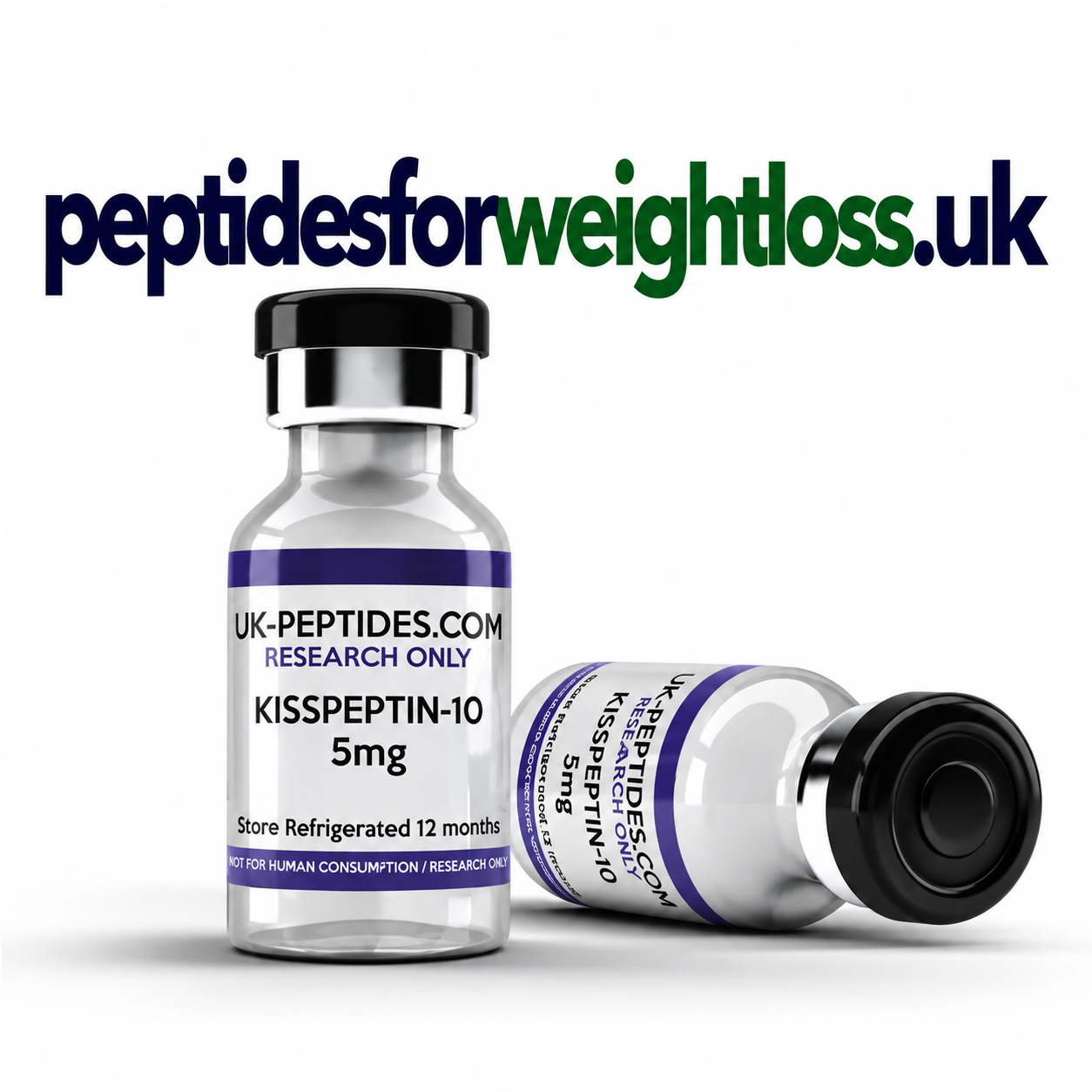
Kisspeptin-10 5mg – KISS1R Reproductive Hormone Research Peptide
Kisspeptin-10 5mg is a synthetic decapeptide research compound associated with investigations into reproductive hormone signalling, gonadotropin-releasing hormone (GnRH) regulation and hypothalamic-pituitary-gonadal (HPG) axis physiology.
Also known as KP-10 or metastin (45–54), Kisspeptin-10 is the biologically active C-terminal 10-amino-acid fragment of kisspeptin-54. It acts as an agonist of the kisspeptin receptor, KISS1R, also known as GPR54.
Kisspeptin signalling plays an important role in the neuroendocrine regulation of puberty, reproductive hormone secretion and fertility-related physiology.
Published human studies have demonstrated that Kisspeptin-10 can influence luteinising hormone and follicle-stimulating hormone secretion under controlled experimental conditions.
However, these physiological findings do not establish that commercially supplied Kisspeptin-10 5mg is safe or effective for treating infertility, increasing testosterone, improving sexual function or managing other hormonal conditions.
Kisspeptin-10 5mg is intended for controlled laboratory research. Researchers should verify its chemical identity, purity, formulation and batch-specific specifications before interpreting experimental findings.
What Is Kisspeptin-10 5mg?
Kisspeptin-10 5mg refers to a research product labelled as containing 5 milligrams of the synthetic peptide Kisspeptin-10.
Kisspeptin-10 is a 10-amino-acid peptide derived from the C-terminal region of kisspeptin-54, a peptide produced through processing of the KISS1 gene product.
The human Kisspeptin-10 sequence is Tyr-Asn-Trp-Asn-Ser-Phe-Gly-Leu-Arg-Phe-NH2.
This peptide sequence retains important receptor-activating properties of the larger kisspeptin molecules.
Kisspeptin-10 acts through KISS1R, a G-protein-coupled receptor involved in reproductive neuroendocrine signalling.
Researchers investigate the compound in relation to GnRH neuronal activity, gonadotropin secretion, reproductive hormone feedback and endocrine physiology.
The labelled 5mg quantity describes the amount of research material and should not be interpreted as a recommended human dose.
Kisspeptin-10 5mg Product Specifications
- Product Name: Kisspeptin-10 5mg
- Scientific Name: Kisspeptin-10
- Alternative Names: KP-10, Metastin (45–54), Kisspeptin Decapeptide
- Classification: Reproductive neuroendocrine signalling peptide
- Peptide Type: C-terminal kisspeptin fragment
- Peptide Length: 10 amino acid residues
- Reference Sequence: Tyr-Asn-Trp-Asn-Ser-Phe-Gly-Leu-Arg-Phe-NH2
- One-Letter Sequence: YNWNSFGLRF-NH2
- C-Terminal Modification: Amidation
- Reference Molecular Formula: C63H83N17O14
- Reference Molecular Weight: Approximately 1,302.45 g/mol
- Reference CAS Number: 374675-21-5
- Reference PubChem CID: 25240297
- Associated Gene: KISS1
- Primary Molecular Target: Kisspeptin receptor (KISS1R)
- Alternative Receptor Name: GPR54
- Primary Research Area: Reproductive hormone signalling
- Additional Research Areas: GnRH regulation, LH and FSH secretion, puberty biology and reproductive endocrinology
- Labelled Quantity: 5mg
- Salt Form: Confirm with manufacturer
- Purity: Requires batch-specific verification
- Physical Presentation: Confirm with manufacturer
- Storage: Follow verified manufacturer instructions
- Intended Use: Laboratory research only
The reference molecular formula and molecular weight describe the defined Kisspeptin-10 peptide. Commercial preparations may contain counterions, residual water or other formulation components that affect total material mass.
Kisspeptin-10 Amino Acid Sequence and Molecular Structure
Kisspeptin-10 contains 10 amino acid residues arranged in the following sequence:
Tyr-Asn-Trp-Asn-Ser-Phe-Gly-Leu-Arg-Phe-NH2
Its one-letter amino acid sequence is:
YNWNSFGLRF-NH2
The peptide contains:
- Tyr: Tyrosine
- Asn: Asparagine
- Trp: Tryptophan
- Asn: Asparagine
- Ser: Serine
- Phe: Phenylalanine
- Gly: Glycine
- Leu: Leucine
- Arg: Arginine
- Phe-NH2: C-terminally amidated phenylalanine
The C-terminal amidation is an important characteristic of the biologically active peptide.
The C-terminal Arg-Phe-NH2 region is associated with receptor recognition and activation.
Researchers should verify the complete sequence, terminal modification and molecular mass when evaluating Kisspeptin-10 research material.
How Does Kisspeptin-10 Work?
Kisspeptin-10 acts as an agonist of the kisspeptin receptor, KISS1R, also called GPR54.
KISS1R is a G-protein-coupled receptor expressed in several tissues, including regions involved in reproductive neuroendocrine signalling.
Activation of KISS1R on GnRH neurons can stimulate GnRH secretion.
GnRH acts on the anterior pituitary gland to regulate the release of luteinising hormone and follicle-stimulating hormone.
These gonadotropins participate in the regulation of gonadal function and reproductive hormone production.
Consequently, Kisspeptin-10 is investigated as an upstream regulator of the hypothalamic-pituitary-gonadal axis.
However, the effects of receptor activation depend on endocrine status, biological context and experimental conditions.
Observed changes in reproductive hormone measurements do not establish long-term therapeutic safety or effectiveness.
Scientific Research Into Kisspeptin-10 5mg
1. Kisspeptin-10 5mg and KISS1R Receptor Research
KISS1R is a receptor involved in the regulation of reproductive hormone signalling.
Kisspeptin-10 retains the receptor-activating C-terminal region of the larger kisspeptin molecules.
Researchers use Kisspeptin-10 in experimental investigations of receptor activation and intracellular signalling.
These studies contribute to understanding the molecular mechanisms of reproductive neuroendocrine regulation.
2. Kisspeptin-10 and GnRH Research
Gonadotropin-releasing hormone is produced by specialised neurons in the hypothalamus.
GnRH secretion regulates pituitary release of luteinising hormone and follicle-stimulating hormone.
Kisspeptin is an important upstream regulator of GnRH neuronal activity.
Human and animal studies have demonstrated that kisspeptin signalling can influence GnRH-associated hormone responses.
3. Kisspeptin-10 5mg and Luteinising Hormone Research
Luteinising hormone, commonly abbreviated LH, is a pituitary hormone involved in reproductive function.
Controlled human physiological studies have reported increased LH secretion following exposure to Kisspeptin-10 under specific experimental conditions.
These findings support the peptide’s role in reproductive endocrine signalling.
However, increased LH does not automatically establish improved fertility or other clinical benefits.
4. Kisspeptin-10 and Follicle-Stimulating Hormone Research
Follicle-stimulating hormone, or FSH, participates in reproductive physiology in both sexes.
Kisspeptin-related signalling can influence FSH secretion through the GnRH pathway.
Published studies have measured FSH responses to Kisspeptin-10 in human research participants.
However, hormone responses vary with endocrine status and experimental conditions.
5. Kisspeptin-10 5mg and Hypothalamic-Pituitary-Gonadal Axis Research
The hypothalamic-pituitary-gonadal axis coordinates communication among the hypothalamus, pituitary gland and gonads.
Kisspeptin signalling contributes to the regulation of this system.
Researchers investigate Kisspeptin-10 to understand how upstream neuroendocrine signals influence reproductive hormone secretion.
These findings are relevant to reproductive physiology but do not establish a commercially available therapeutic treatment.
6. Kisspeptin-10 and Puberty Research
Puberty involves activation and maturation of reproductive neuroendocrine pathways.
Kisspeptin and KISS1R have important roles in normal pubertal development.
Human genetic studies have associated disruption of kisspeptin signalling with abnormalities of reproductive development.
These findings support the physiological importance of the kisspeptin system.
7. Kisspeptin-10 5mg and Reproductive Hormone Feedback
Reproductive hormone regulation involves feedback interactions among the hypothalamus, pituitary gland and gonads.
Kisspeptin neurons participate in the integration of hormonal and neural signals.
Researchers investigate Kisspeptin-10 to understand how receptor activation affects downstream hormone secretion.
However, physiological responses depend on the surrounding endocrine environment.
8. Kisspeptin-10 and KNDy Neuron Research
KNDy neurons are associated with kisspeptin, neurokinin B and dynorphin signalling.
These neuropeptides participate in the regulation of reproductive hormone pulsatility.
Research has examined their roles in coordinating GnRH-related endocrine activity.
Kisspeptin-10 provides a research tool for investigating one component of this signalling network.
9. Kisspeptin-10 5mg and Hormone Pulsatility
Reproductive hormones are frequently released in pulses rather than at constant rates.
GnRH pulsatility contributes to the regulation of LH and FSH secretion.
Human studies have investigated how Kisspeptin-10 affects LH pulse frequency.
These experiments provide insight into neuroendocrine signalling dynamics.
10. Kisspeptin-10 and Testosterone Research
Testosterone production is influenced by LH signalling.
Some human Kisspeptin-10 studies have reported changes in testosterone concentrations following experimental exposure.
However, these findings do not establish Kisspeptin-10 as an approved testosterone treatment.
Long-term effectiveness and safety for hormonal disorders remain unestablished.
11. Kisspeptin-10 5mg and Oestrogen Research
Oestrogen participates in reproductive development, menstrual physiology and hormonal feedback.
Kisspeptin neurons respond to sex-steroid feedback signals.
Researchers investigate these interactions to understand reproductive hormone regulation.
However, experimental Kisspeptin-10 activity does not establish treatment effectiveness for oestrogen-related disorders.
12. Kisspeptin-10 and Menstrual Cycle Research
The menstrual cycle involves coordinated changes in GnRH, LH, FSH and ovarian hormones.
Kisspeptin signalling contributes to the neuroendocrine regulation of these processes.
Research has examined kisspeptin-related hormone responses during different phases of the menstrual cycle.
However, clinical effectiveness for menstrual disorders has not been established for commercially supplied Kisspeptin-10 preparations.
13. Kisspeptin-10 5mg and Fertility Research
Kisspeptin signalling is important for normal reproductive function.
Researchers have investigated kisspeptin peptides in relation to fertility-associated endocrine pathways.
Clinical research involving different kisspeptin forms has explored potential applications in reproductive medicine.
However, findings involving Kisspeptin-54 or other analogues should not automatically be attributed to Kisspeptin-10.
14. Kisspeptin-10 and Metabolic Signalling
Reproductive endocrine function interacts with metabolic and nutritional signals.
Kisspeptin-related pathways have been investigated in connection with energy availability and reproductive physiology.
These studies contribute to understanding the relationship between metabolism and reproductive hormone regulation.
However, there is insufficient evidence demonstrating that Kisspeptin-10 is an effective weight-loss treatment.
15. Kisspeptin-10 5mg and Peptide Analytical Chemistry
Analytical chemistry is essential for verifying the identity and composition of research peptides.
For Kisspeptin-10, important considerations include the complete amino acid sequence, C-terminal amidation and expected molecular mass.
Techniques such as chromatography and mass spectrometry can support molecular characterisation.
Batch-specific analytical documentation is important for reproducible research.
Kisspeptin-10 5mg vs Kisspeptin-54
Kisspeptin-10 and Kisspeptin-54 belong to the same peptide family but differ in molecular length.
Kisspeptin-10 contains 10 amino acid residues.
Kisspeptin-54 contains 54 amino acid residues.
Both can activate KISS1R and have been investigated in reproductive hormone research.
However, differences in molecular structure, pharmacokinetics and experimental conditions may influence observed responses.
Results involving one peptide should not automatically be attributed to the other.
Kisspeptin-10 5mg vs GnRH
Kisspeptin-10 and GnRH act at different points in reproductive endocrine signalling.
Kisspeptin-10 activates KISS1R and can stimulate GnRH neuronal activity.
GnRH acts directly on pituitary GnRH receptors to regulate LH and FSH secretion.
A controlled human study comparing Kisspeptin-10, Kisspeptin-54 and GnRH reported different gonadotropin responses under the tested conditions.
These compounds should not be treated as interchangeable.
Kisspeptin-10 5mg vs Gonadorelin
Gonadorelin is a pharmaceutical name associated with synthetic GnRH.
It acts directly on GnRH receptors in the pituitary gland.
Kisspeptin-10 acts upstream through the kisspeptin receptor.
Their receptor targets and pharmacological roles differ.
Kisspeptin-10 5mg vs Other Reproductive Peptides
Kisspeptin-10 is primarily associated with reproductive neuroendocrine signalling.
Other research peptides may act through different receptor systems or hormonal pathways.
Compounds should be compared according to molecular identity, receptor target and published evidence rather than broad marketing categories.
Kisspeptin-10 5mg and Testosterone Claims
Controlled human studies have demonstrated that Kisspeptin-10 can influence LH and testosterone measurements under specific experimental conditions.
However, these findings do not establish that Kisspeptin-10 safely treats testosterone deficiency.
Changes in hormone concentrations during a research study do not establish long-term clinical effectiveness.
Kisspeptin-10 5mg and Fertility Claims
Kisspeptin signalling is important for normal reproductive physiology.
Experimental and clinical studies have investigated its potential relevance to fertility-related endocrine disorders.
However, Kisspeptin-10 is not an established approved treatment for infertility.
Clinical outcomes such as pregnancy and live birth require separate evaluation from short-term hormone measurements.
Kisspeptin-10 5mg and Weight-Loss Research
Kisspeptin signalling interacts with reproductive and metabolic physiology.
However, Kisspeptin-10 is not an established weight-loss peptide.
There is insufficient reliable evidence demonstrating that Kisspeptin-10 reduces appetite, produces meaningful fat loss or treats obesity in humans.
Kisspeptin-10 5mg and Human Research
Kisspeptin-10 has been investigated in controlled human physiological studies.
Published research includes investigations of gonadotropin secretion, hormone pulsatility and reproductive endocrine responses.
A 2026 study examined different exposure patterns in healthy men and reported sustained gonadotropin responses under selected experimental conditions.
However, the study was relatively small and did not establish long-term safety or therapeutic effectiveness for reproductive disorders.
Kisspeptin-10 5mg Research Quality and Documentation
Important considerations when evaluating Kisspeptin-10 research material include:
- Verification of the complete 10-amino-acid sequence
- Confirmation of C-terminal amidation
- Verification of the expected molecular mass
- Identification of the supplied salt form
- Batch-specific certificate of analysis
- Suitable analytical purity testing
- Mass spectrometry or another suitable identity method
- Assessment of peptide-related impurities
- Confirmation of the labelled 5mg quantity
- Manufacturer and batch traceability
- Product-specific storage and stability documentation
- Clearly stated laboratory research classification
Storage and Handling of Kisspeptin-10 5mg
Kisspeptin-10 5mg should be stored according to verified manufacturer instructions.
Peptide stability depends on chemical form, formulation, packaging and environmental conditions.
Researchers should not assume that all Kisspeptin-10 preparations have identical storage requirements or shelf lives.
Laboratory handling should follow institutional procedures and product-specific safety documentation.
Kisspeptin-10 5mg Safety and Scientific Limitations
Kisspeptin-10 is a biologically active reproductive neuroendocrine peptide.
Human studies have demonstrated effects on reproductive hormone secretion under controlled experimental conditions.
However, these studies do not establish the long-term safety of Kisspeptin-10 for routine use.
Its effects may depend on reproductive status, hormonal feedback and exposure conditions.
Potential concerns include unintended changes in reproductive hormone signalling and uncertainties related to formulation, impurities and repeated exposure.
Research-grade material should not be assumed sterile, pharmaceutical grade or suitable for human administration.
The labelled 5mg quantity is not a recommended human dose.
Frequently Asked Questions About Kisspeptin-10 5mg
What is Kisspeptin-10 5mg?
Kisspeptin-10 5mg is a research product designation for a synthetic 10-amino-acid kisspeptin fragment with a labelled quantity of 5mg.
What is another name for Kisspeptin-10?
It is also known as KP-10 or metastin (45–54).
How many amino acids does Kisspeptin-10 contain?
Kisspeptin-10 contains 10 amino acid residues.
What is the Kisspeptin-10 amino acid sequence?
The reference sequence is YNWNSFGLRF-NH2.
What is the molecular formula of Kisspeptin-10?
The reference molecular formula is C63H83N17O14.
What is the molecular weight of Kisspeptin-10?
The reference molecular weight is approximately 1,302.45 g/mol.
What is the CAS number of Kisspeptin-10?
The commonly referenced CAS number is 374675-21-5.
Which receptor does Kisspeptin-10 activate?
Kisspeptin-10 activates the kisspeptin receptor, KISS1R, also known as GPR54.
Does Kisspeptin-10 influence GnRH?
Yes. Kisspeptin signalling acts upstream of GnRH and participates in regulating its secretion.
Does Kisspeptin-10 increase LH?
Controlled human studies have reported increased LH secretion under specific experimental conditions.
Does Kisspeptin-10 increase testosterone?
Some human studies have reported changes in testosterone concentrations, but this does not establish treatment effectiveness for testosterone deficiency.
Is Kisspeptin-10 the same as Kisspeptin-54?
No. Kisspeptin-10 contains 10 amino acids, while Kisspeptin-54 contains 54.
Does Kisspeptin-10 treat infertility?
Its effectiveness as an approved treatment for infertility has not been established.
Does Kisspeptin-10 help with weight loss?
There is insufficient reliable evidence demonstrating clinically meaningful human weight loss.
Is Kisspeptin-10 approved for human hormone treatment?
Kisspeptin-10 is not an established approved medicine for routine reproductive hormone treatment.
What does Kisspeptin-10 5mg mean?
The designation refers to a labelled quantity of 5mg of research material, not a recommended human dose.
Kisspeptin-10 5mg – Scientific Product Summary
Kisspeptin-10 5mg is a synthetic decapeptide research compound associated with reproductive neuroendocrine signalling.
Its reference sequence is YNWNSFGLRF-NH2, with a molecular formula of C63H83N17O14 and molecular weight of approximately 1,302.45 g/mol.
Kisspeptin-10 activates KISS1R and has been investigated in human research involving GnRH-associated signalling, LH and FSH secretion and reproductive hormone pulsatility.
However, long-term human safety and therapeutic effectiveness for infertility, testosterone deficiency or other hormonal conditions remain unestablished.
Researchers evaluating Kisspeptin-10 5mg should verify chemical identity, C-terminal amidation, purity, salt form, labelled quantity and batch-specific analytical documentation.

Reviews
There are no reviews yet.