
Description
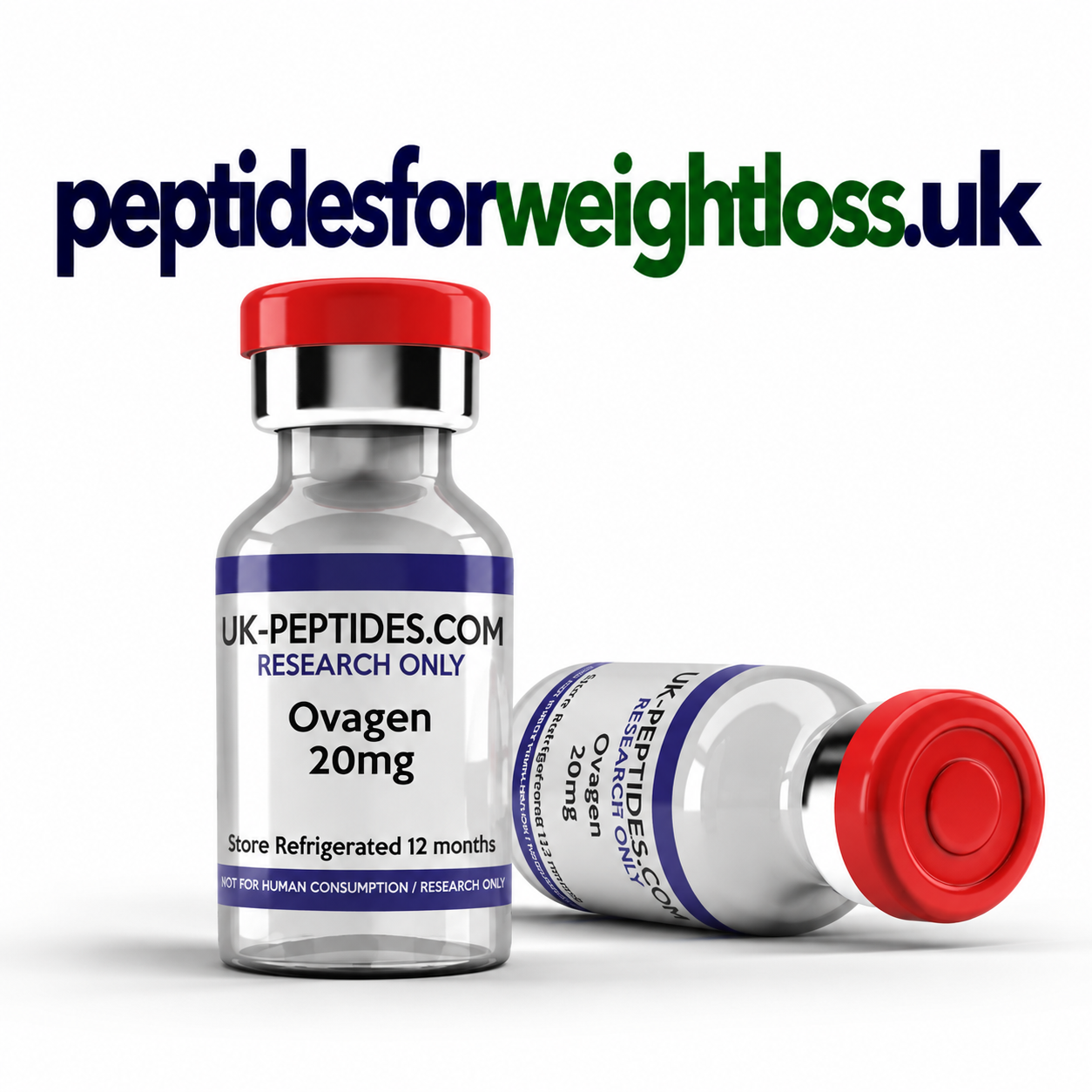
Ovagen 20mg Bioregulator – EDL Research Peptide
Ovagen 20mg Bioregulator is a synthetic tripeptide associated with scientific research into cellular regulation, kidney biology, tissue responses and short peptide bioregulation. Commonly identified by the amino acid sequence Glu-Asp-Leu (EDL), Ovagen belongs to a group of small peptides investigated within the Khavinson bioregulator research programme.
Ovagen has attracted scientific interest because of experimental studies examining how short amino acid sequences interact with biological systems. Research involving the EDL peptide has explored renal cell responses, cellular proliferation and potential molecular regulatory mechanisms.
This Ovagen 20mg product listing provides information about the peptide’s molecular structure, research background, laboratory quality considerations and limitations of the available scientific evidence.
What Is Ovagen Peptide?
Ovagen is commonly described as a synthetic tripeptide consisting of three amino acids: glutamic acid, aspartic acid and leucine.
Its sequence is abbreviated EDL, representing Glu (E), Asp (D) and Leu (L).
The peptide is associated with a wider family of short synthetic bioregulators investigated for their possible interactions with tissue-specific cellular processes.
Ovagen has been linked historically to liver-derived peptide research. However, published experimental investigations of the EDL sequence have focused substantially on kidney-related models.
The term bioregulator describes its research classification and should not be interpreted as proof of medical effectiveness.
Ovagen 20mg Product Specifications
- Product Name: Ovagen 20mg Bioregulator
- Alternative Name: EDL Peptide
- Amino Acid Sequence: Glu-Asp-Leu
- Peptide Classification: Synthetic tripeptide
- Labelled Quantity: 20mg
- Molecular Formula: C15H25N3O8 (free peptide)
- Approximate Molecular Weight: 375.37 g/mol (free peptide)
- Research Category: Short peptide bioregulation
- Research Focus: Renal cell biology, cellular signalling and tissue regulation
- Exact Product Formulation: Requires manufacturer verification
- Product Purity: Confirm using batch-specific analytical documentation
- Storage: Follow verified manufacturer instructions
Understanding the Ovagen EDL Peptide Structure
The EDL sequence contains three amino acid residues connected through peptide bonds.
- Glutamic Acid (E): An amino acid with an acidic side chain.
- Aspartic Acid (D): Another acidic amino acid commonly found in biological peptides and proteins.
- Leucine (L): A hydrophobic amino acid involved in many protein structures.
The combination forms a chemically defined tripeptide that can be investigated in laboratory systems.
Researchers should confirm that a product labelled Ovagen contains the intended EDL sequence because the name is also used for an unrelated veterinary hormone preparation.
Scientific Research Into Ovagen 20mg
1. Kidney Cell Biology Research
One of the principal research areas involving the EDL peptide concerns kidney cell biology.
Preclinical studies have investigated cellular responses in renal tissue models, including changes in proliferation and regulatory proteins.
These experiments provide preliminary information about the possible biological activity of short peptide sequences.
However, findings from laboratory systems cannot establish that Ovagen improves kidney function or treats renal disease in humans.
2. Experimental Kidney Injury Models
Some research involving EDL has examined biological responses in animal models of kidney injury.
These studies have explored tissue-related measurements and cellular changes following experimental injury.
Although such investigations may help researchers formulate hypotheses about peptide-related biological mechanisms, the available evidence is limited and requires independent replication.
There is no established clinical evidence that Ovagen prevents or reverses kidney damage in people.
3. Liver-Associated Bioregulator Research
Ovagen has historically been associated with liver-derived peptide complexes and proposed liver tissue regulation.
Its classification within the short peptide bioregulator family has led to interest in possible hepatic cellular processes.
However, a historical tissue association or patent claim does not demonstrate therapeutic effectiveness.
Evidence supporting direct liver-protective or liver-regenerating effects of the EDL peptide remains insufficient.
4. Cellular Proliferation and Regulation
Cellular proliferation is the process through which cells grow and divide.
Research involving short peptide bioregulators has investigated changes in cell proliferation, differentiation and expression of regulatory proteins.
EDL has been included in experimental investigations of these cellular processes.
Such observations must be interpreted within the specific laboratory conditions studied and should not be presented as proof of tissue regeneration in humans.
5. Peptide and DNA Interaction Research
Another area of interest within the Khavinson peptide research programme involves interactions between short peptides and DNA.
Computational studies have explored whether selected short amino acid sequences, including EDL, may interact with particular DNA structures.
Molecular modelling can generate hypotheses about potential interactions, but it does not independently demonstrate functional gene regulation in living organisms.
Further experimental investigation is necessary to establish the biological significance of these proposed mechanisms.
Ovagen and Liver Function: What Does the Evidence Show?
Ovagen is sometimes described commercially as a liver bioregulator.
However, much of the identifiable experimental literature concerns kidney-related cellular and animal models rather than controlled human studies of liver function.
There is insufficient reliable clinical evidence that Ovagen improves liver enzyme measurements, protects against liver disease or promotes liver regeneration.
Researchers should distinguish historical descriptions, patents, laboratory observations and established clinical findings when evaluating claims about the peptide.
Ovagen and Kidney Research
Research involving the EDL sequence has explored kidney-associated cellular processes and experimental responses to tissue injury.
These investigations are relevant to basic renal biology, but the published evidence remains narrow.
Findings have not been adequately validated through large, independent human clinical trials.
Ovagen should therefore not be described as an approved kidney treatment or a clinically proven renal protective compound.
Ovagen vs Other Peptide Bioregulators
Ovagen belongs to a wider group of short synthetic peptides studied for possible cellular regulatory activity.
- Ovagen (EDL): A Glu-Asp-Leu tripeptide associated with renal and liver-related research questions.
- Pinealon (EDR): A Glu-Asp-Arg tripeptide investigated in neuronal and oxidative stress research.
- Pancragen (KEDW): A Lys-Glu-Asp-Trp tetrapeptide investigated in pancreatic cell and gene expression research.
- Epitalon (AEDG): An Ala-Glu-Asp-Gly tetrapeptide associated with separate investigations into cellular ageing.
These compounds have different amino acid sequences and should not be treated as biologically interchangeable.
Understanding the Ovagen 20mg Label
The 20mg designation describes the labelled quantity of peptide material.
It does not represent a recommended human dose or independently verify purity, molecular identity, sterility or pharmaceutical quality.
Researchers should review the manufacturer’s documentation to confirm the precise chemical composition of the supplied material.
Research Quality and Product Documentation
Important considerations when evaluating Ovagen research material include:
- Verified Glu-Asp-Leu peptide identity
- Confirmation of the exact molecular form
- Batch-specific certificate of analysis
- Analytical purity and composition testing
- Accurate labelled peptide quantity
- Manufacturer and batch traceability
- Packaging integrity
- Verified storage and stability instructions
- Clearly stated intended-use restrictions
These details help researchers assess product quality without relying on unsupported claims about medical effectiveness.
Storage and Handling Considerations
Ovagen research material should be stored and handled according to verified manufacturer instructions.
Appropriate conditions may depend on the product’s formulation, physical form, packaging and available stability data.
Generic peptide storage recommendations should not replace product-specific technical documentation.
Safety and Research Limitations
Ovagen remains an investigational peptide with insufficient human clinical evidence.
Its long-term safety, pharmacokinetics, clinical effectiveness and appropriate therapeutic applications have not been established.
Preclinical research does not demonstrate that Ovagen treats liver disease, kidney disease, metabolic disorders or age-related conditions.
Ovagen EDL is not an established FDA-, EMA- or MHRA-approved medicine for human treatment.
This information is intended for scientific and educational purposes and does not provide medical advice, human dosing recommendations or administration instructions.
Frequently Asked Questions About Ovagen 20mg
What is Ovagen 20mg?
Ovagen 20mg is a product listing for a synthetic tripeptide commonly identified by the amino acid sequence Glu-Asp-Leu (EDL).
What does EDL stand for?
EDL represents glutamic acid, aspartic acid and leucine, the three amino acids forming the Ovagen peptide.
What is Ovagen researched for?
Ovagen has been associated with preclinical research into renal cell biology, cellular proliferation, peptide bioregulation and proposed molecular regulatory mechanisms.
Is Ovagen a liver peptide?
Ovagen has a historical association with liver-derived peptide research, but its identifiable experimental literature includes kidney-related studies. Its clinical effects on liver function remain unproven.
Does Ovagen improve kidney function?
There is insufficient reliable human clinical evidence to establish that Ovagen improves kidney function or treats kidney disease.
Is Ovagen an ovarian peptide?
No. The EDL research peptide should not be confused with an unrelated veterinary hormone product also marketed under the name Ovagen.
Is Ovagen used for weight loss?
Ovagen is not an established weight-loss treatment, and reliable human evidence supporting weight-management benefits is lacking.
What is the difference between Ovagen and Pinealon?
Ovagen is the EDL tripeptide, while Pinealon is the EDR tripeptide. Their amino acid sequences and experimental research backgrounds differ.
What does Ovagen 20mg mean?
The 20mg designation identifies the labelled amount of peptide material. It does not establish a recommended human dose.
Is Ovagen approved for medical use?
The EDL peptide is not an established approved medicine for human therapeutic use.
Ovagen 20mg Bioregulator – Product Summary
Ovagen 20mg Bioregulator is a synthetic EDL tripeptide associated with scientific investigations into renal cell biology, short peptide regulation and proposed tissue-specific biological mechanisms.
Its chemical structure and preclinical research background make it relevant to the study of short peptide bioregulators.
However, human safety and clinical effectiveness remain unestablished. Researchers should verify molecular identity, purity, batch documentation, formulation and intended use before selecting Ovagen 20mg for laboratory research.

Reviews
There are no reviews yet.