
Description
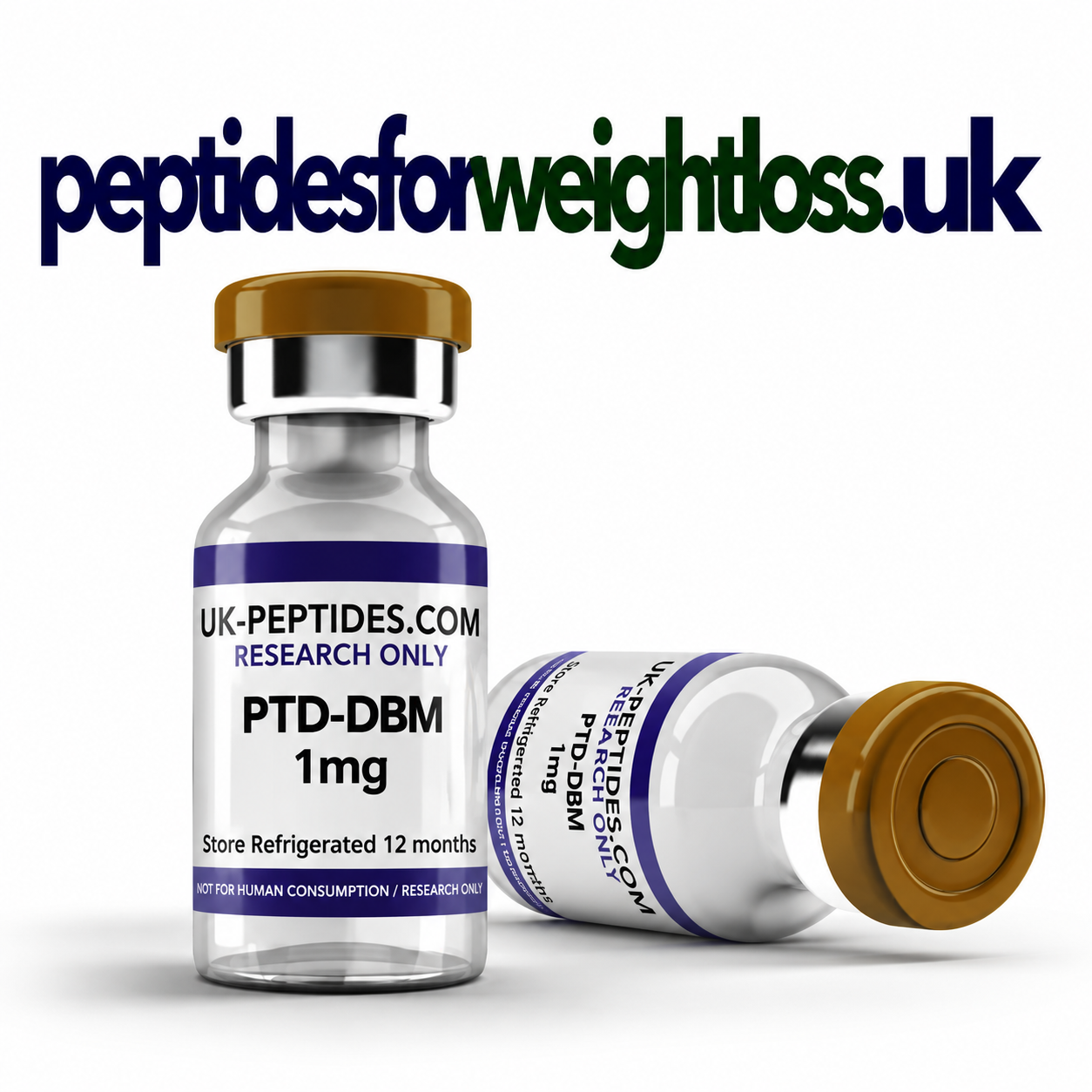
PTD-DBM 1mg – Research Peptide for Wnt Signalling Studies
PTD-DBM 1mg is an experimental research peptide investigated for its interaction with the CXXC5 protein and the Wnt/β-catenin signalling pathway. This pathway plays an important role in cellular communication, tissue development and hair follicle biology.
PTD-DBM, short for Protein Transduction Domain–Dishevelled Binding Motif, has attracted scientific interest because of its ability to interfere with the interaction between CXXC5 and Dishevelled proteins in experimental systems. Research involving this peptide has contributed to the understanding of molecular processes associated with hair follicle activity and cellular regeneration.
What Is PTD-DBM Peptide?
PTD-DBM is a synthetic peptide designed to investigate a specific protein interaction within the Wnt/β-catenin signalling pathway. It combines a protein transduction domain with a Dishevelled-binding motif, allowing researchers to study how the CXXC5–Dishevelled interaction influences cellular signalling.
CXXC5 acts as a negative regulator of Wnt/β-catenin activity. By disrupting its interaction with Dishevelled, PTD-DBM has been shown to enhance Wnt-related signalling in certain laboratory models.
PTD-DBM 1mg Product Specifications
- Product Name: PTD-DBM 1mg
- Full Name: Protein Transduction Domain–Dishevelled Binding Motif
- Labelled Quantity: 1mg
- Product Category: Experimental research peptide
- Research Target: CXXC5–Dishevelled interaction
- Associated Pathway: Wnt/β-catenin signalling
- Research Areas: Cellular signalling and hair follicle biology
- Purity and Composition: Subject to manufacturer verification
How Does PTD-DBM Work?
PTD-DBM has been investigated as a competitive peptide capable of disrupting the interaction between CXXC5 and Dishevelled, commonly abbreviated as Dvl.
Dishevelled is involved in transmitting signals within the Wnt pathway. When CXXC5 interacts with Dishevelled, it can suppress downstream Wnt/β-catenin signalling.
Experimental studies suggest that PTD-DBM can interfere with this interaction, allowing researchers to investigate changes in β-catenin activity and related cellular responses.
Scientific Research Into PTD-DBM
1. Wnt/β-Catenin Signalling Research
The Wnt/β-catenin pathway contributes to cellular development, differentiation and tissue maintenance. Researchers use experimental compounds such as PTD-DBM to investigate the regulatory proteins that influence this pathway.
Studies involving PTD-DBM have examined changes in β-catenin signalling after disruption of CXXC5-mediated inhibition.
2. Hair Follicle Biology
PTD-DBM has received attention in preclinical hair follicle research. Published experiments have investigated its effects on follicular signalling, cellular proliferation and hair growth responses in animal models.
A 2023 study examining CXXC5 and androgen-related hair loss reported that PTD-DBM influenced Wnt/β-catenin activity and hair follicle responses in experimental systems.
These findings are preliminary and do not demonstrate that PTD-DBM can safely or effectively restore hair growth in humans.
3. Cellular Regeneration Research
Researchers have also studied PTD-DBM in models of wound-induced hair follicle neogenesis, a biological process in which new hair follicles form following tissue injury.
These experiments help scientists understand relationships between signalling proteins, cellular responses and follicle development.
4. CXXC5 Protein Interaction Studies
Another important area of PTD-DBM research involves understanding how CXXC5 interacts with Dishevelled proteins.
Studying this interaction may provide insight into the regulation of Wnt signalling and the behaviour of different cellular systems.
PTD-DBM and Hair Growth: What Does the Evidence Show?
Research involving PTD-DBM has demonstrated changes in hair follicle activity and Wnt signalling in preclinical models.
However, these observations should not be confused with clinical evidence of effectiveness. Laboratory and animal studies cannot establish an appropriate human dosage, long-term safety profile or reliable therapeutic outcome.
PTD-DBM remains an investigational compound rather than an established hair-loss medicine.
Understanding the PTD-DBM 1mg Label
The 1mg designation indicates the labelled quantity of peptide material. It does not independently confirm molecular identity, purity, sterility or pharmaceutical suitability.
Researchers should verify the exact peptide sequence and review the manufacturer’s technical documentation when assessing the product.
Research Quality and Product Documentation
When evaluating a PTD-DBM research peptide, important considerations include:
- Verified peptide identity and molecular composition
- Batch-specific analytical documentation
- Purity testing and relevant laboratory methods
- Manufacturer and batch identification
- Appropriate packaging and storage specifications
- Clear research-use restrictions
Product quality statements should be supported by reliable documentation rather than assumed from the product name or packaging.
Storage and Handling Considerations
PTD-DBM research materials should be handled according to the manufacturer’s verified specifications and applicable laboratory safety procedures.
Storage requirements may depend on the exact peptide formulation, physical state, packaging and stability data. Researchers should consult product-specific technical information rather than assuming universal storage conditions.
PTD-DBM Safety and Research Limitations
PTD-DBM has not been established as safe or effective for human treatment. Available research does not provide sufficient clinical evidence to support claims about treating hair loss, improving wound healing or stimulating human tissue regeneration.
Because Wnt/β-catenin signalling participates in numerous biological processes, modifying this pathway requires careful scientific evaluation.
This product information is intended for scientific and educational purposes and does not constitute medical advice or instructions for human administration.
Frequently Asked Questions About PTD-DBM 1mg
What is PTD-DBM 1mg?
PTD-DBM 1mg is a labelled quantity of an experimental peptide investigated for its effects on the CXXC5–Dishevelled interaction and Wnt/β-catenin signalling.
What does PTD-DBM stand for?
PTD-DBM stands for Protein Transduction Domain–Dishevelled Binding Motif.
Does PTD-DBM stimulate hair growth?
Preclinical experiments have reported hair follicle responses in animal models. However, there is insufficient human clinical evidence to establish PTD-DBM as an effective hair-growth treatment.
What is the relationship between PTD-DBM and CXXC5?
PTD-DBM was designed to interfere with the interaction between CXXC5 and Dishevelled, helping researchers study regulation of the Wnt/β-catenin pathway.
Is PTD-DBM an approved medicine?
PTD-DBM is an investigational peptide and is not an established approved treatment for hair loss.
What does the 1mg quantity indicate?
It identifies the labelled amount of peptide material, not a recommended dose or confirmation of pharmaceutical quality.
PTD-DBM 1mg – Product Summary
PTD-DBM 1mg is an experimental peptide relevant to research into Wnt/β-catenin signalling, CXXC5 protein interactions and hair follicle biology. Published preclinical findings have expanded scientific understanding of these pathways, while important questions remain about human safety and clinical effectiveness.
Researchers should confirm the product’s identity, purity, batch documentation and intended use before selecting PTD-DBM for laboratory investigation.



Reviews
There are no reviews yet.